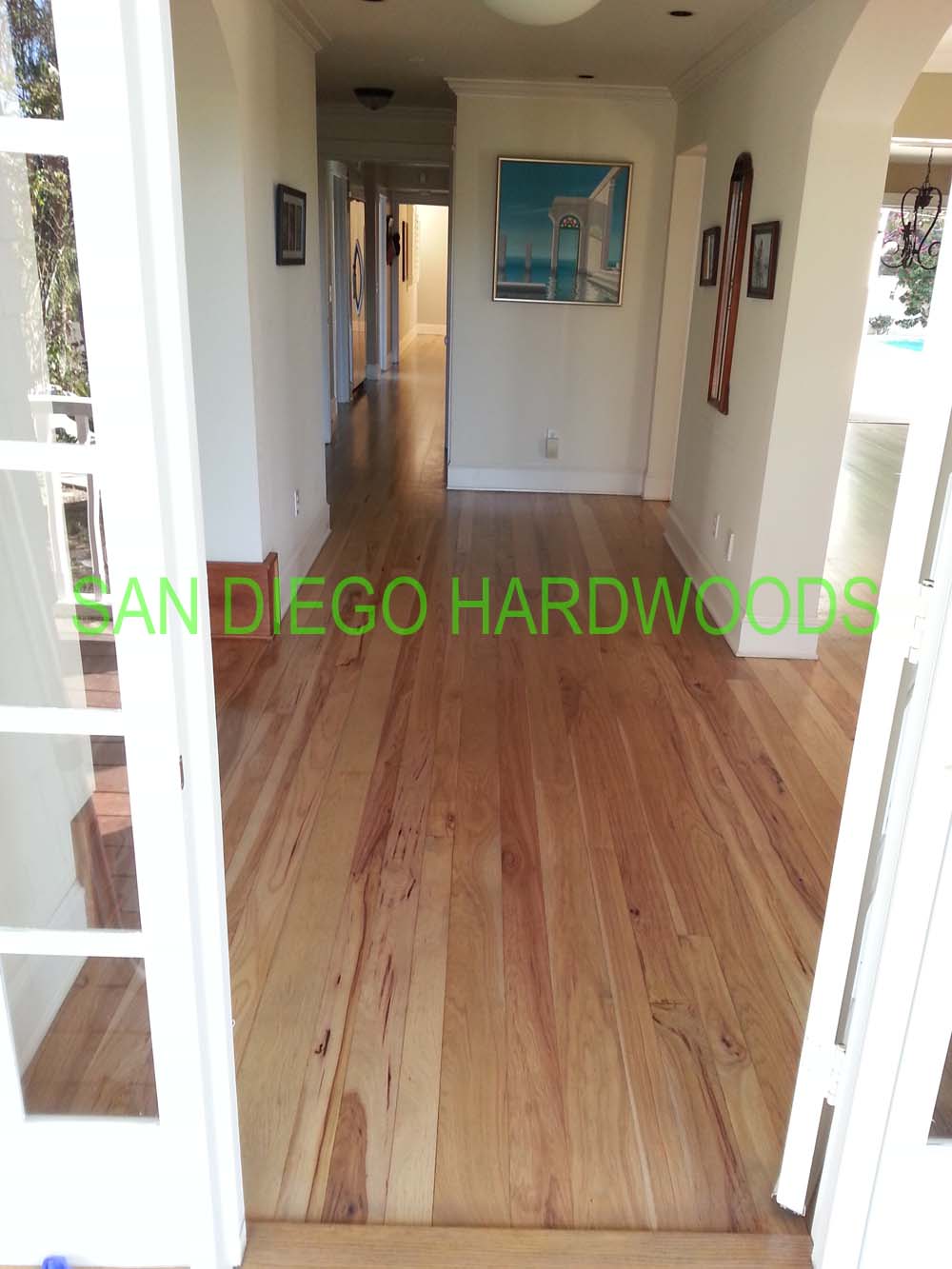
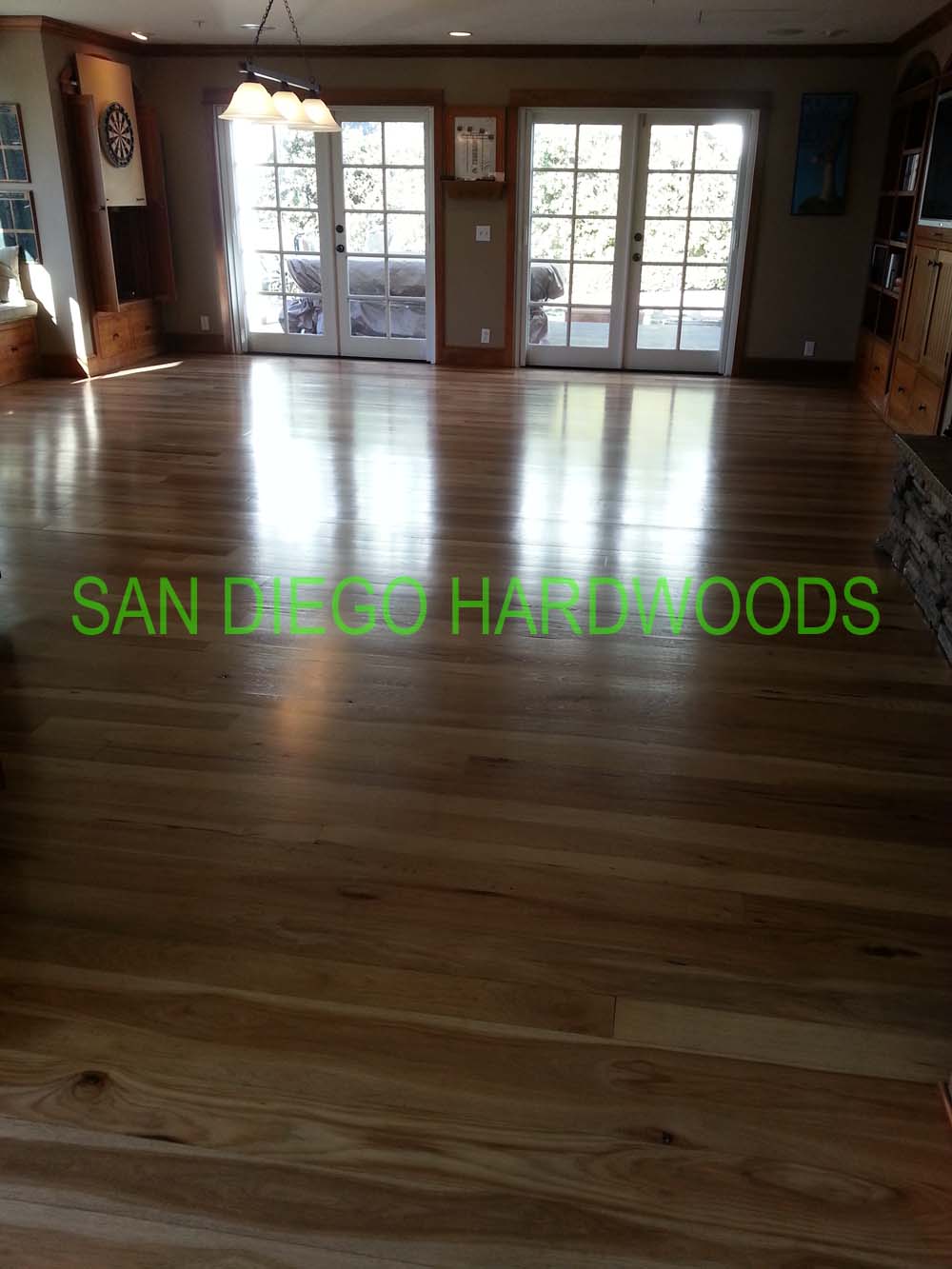
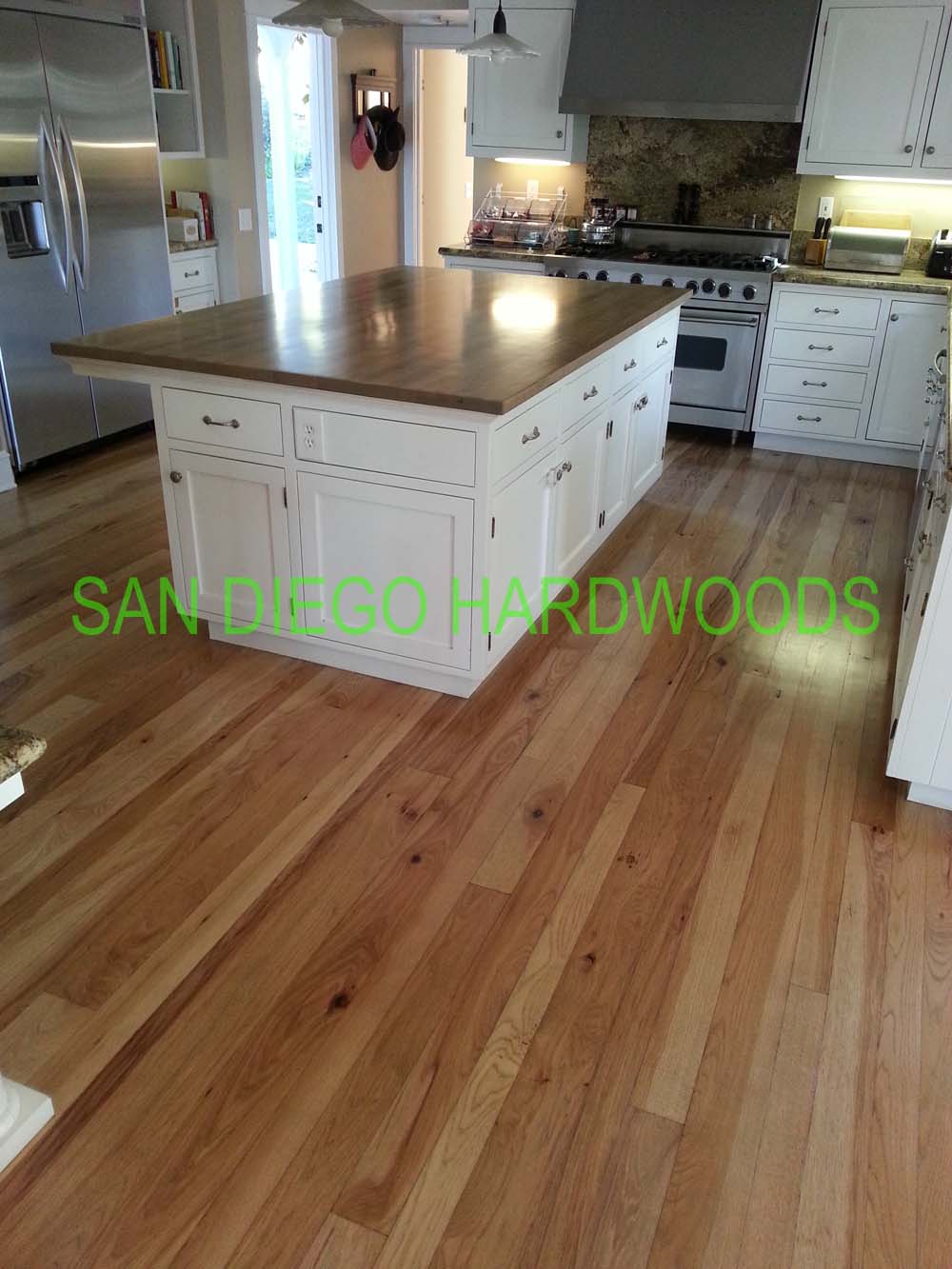
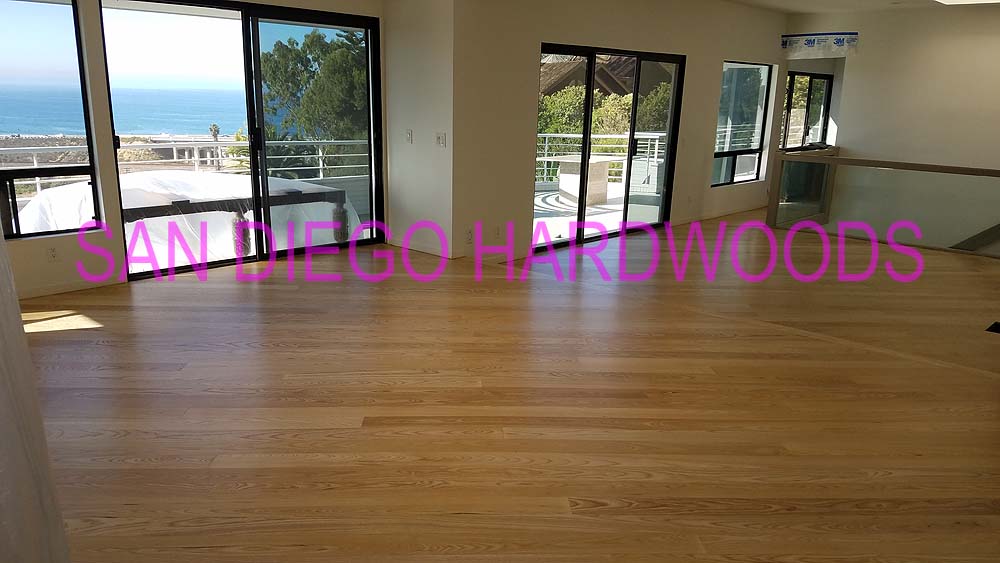
San Diego Hardwood Flooring Blog, Project Guides and Expert Floor-Care Advice
Explore real San Diego hardwood flooring projects and practical information about 100% dust-contained sanding and refinishing, deep cleaning and compatible recoating, repairs, restoration, custom staining, solid and unfinished engineered wood installation, bamboo flooring and modern water-based finish systems.
Not Sure What Your Hardwood or Bamboo Floor Actually Needs?
Start with a free phone and photo assessment. Send wide photographs of the rooms and close photographs showing scratches, cloudy finish, worn areas, stains, gaps, damaged boards or installation conditions. We can discuss whether the likely next step is deep cleaning, recoating, repair, complete refinishing, installation or a detailed on-site consultation.
Hardwood Flooring Project Guides, Before-and-After Results and Practical Floor-Care Information
The projects below document actual hardwood and bamboo flooring conditions, materials, repairs and restoration methods. Explore examples involving worn finishes, termite damage, seasonal gaps, distressed flooring, engineered wood, solid oak, custom staining, new installation and complete dust-contained refinishing.
Dust-Contained Sanding and Refinishing
Repairs, Board Replacement and Restoration
Solid and Engineered Wood Installation
Custom Staining and Water-Based Finishes
Each floor must be evaluated individually. Wood species, construction, remaining wear layer, existing coatings, contamination, moisture, damage and the desired result determine whether the correct solution is deep cleaning, recoating, repair, refinishing or replacement.
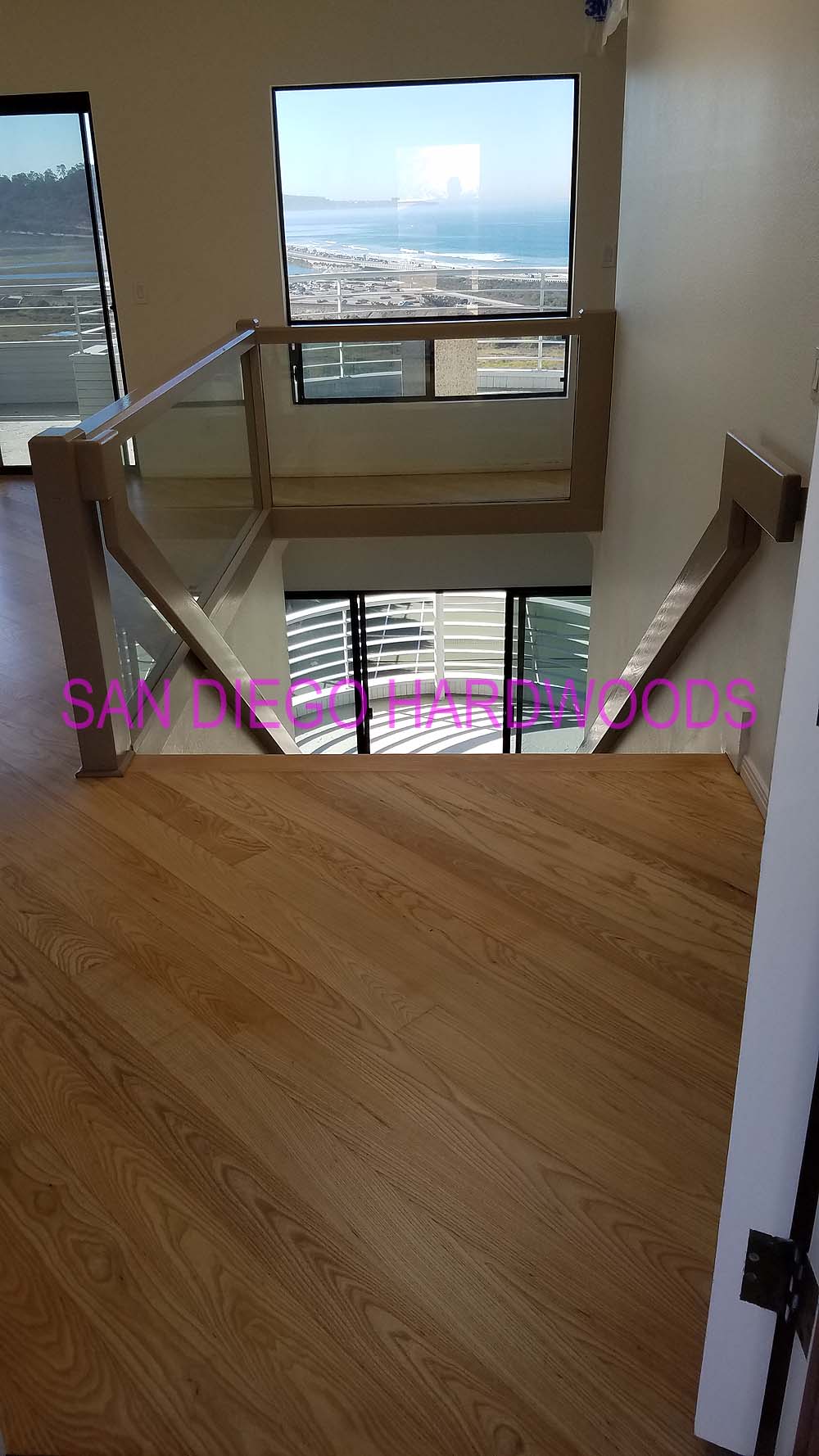
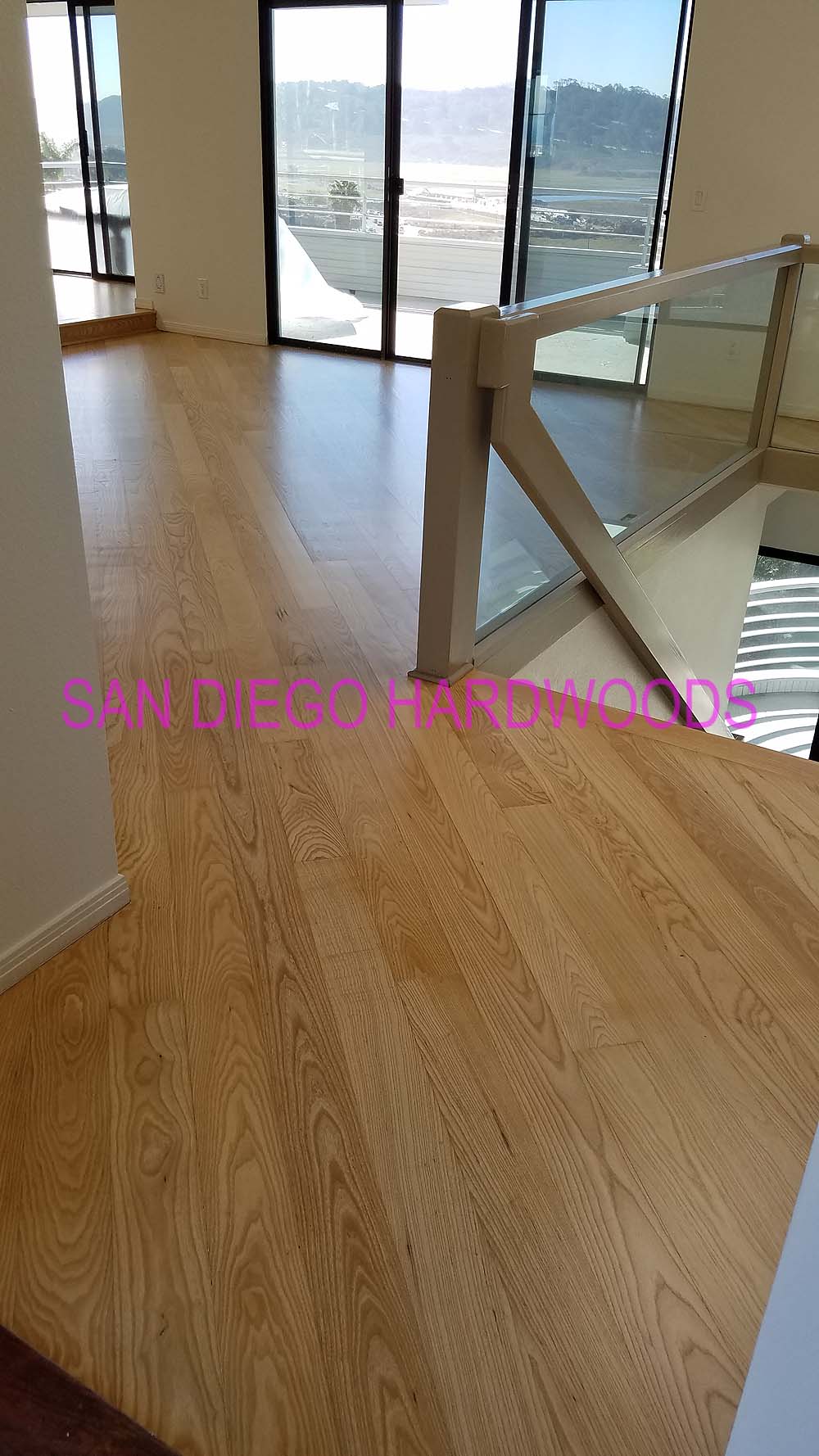
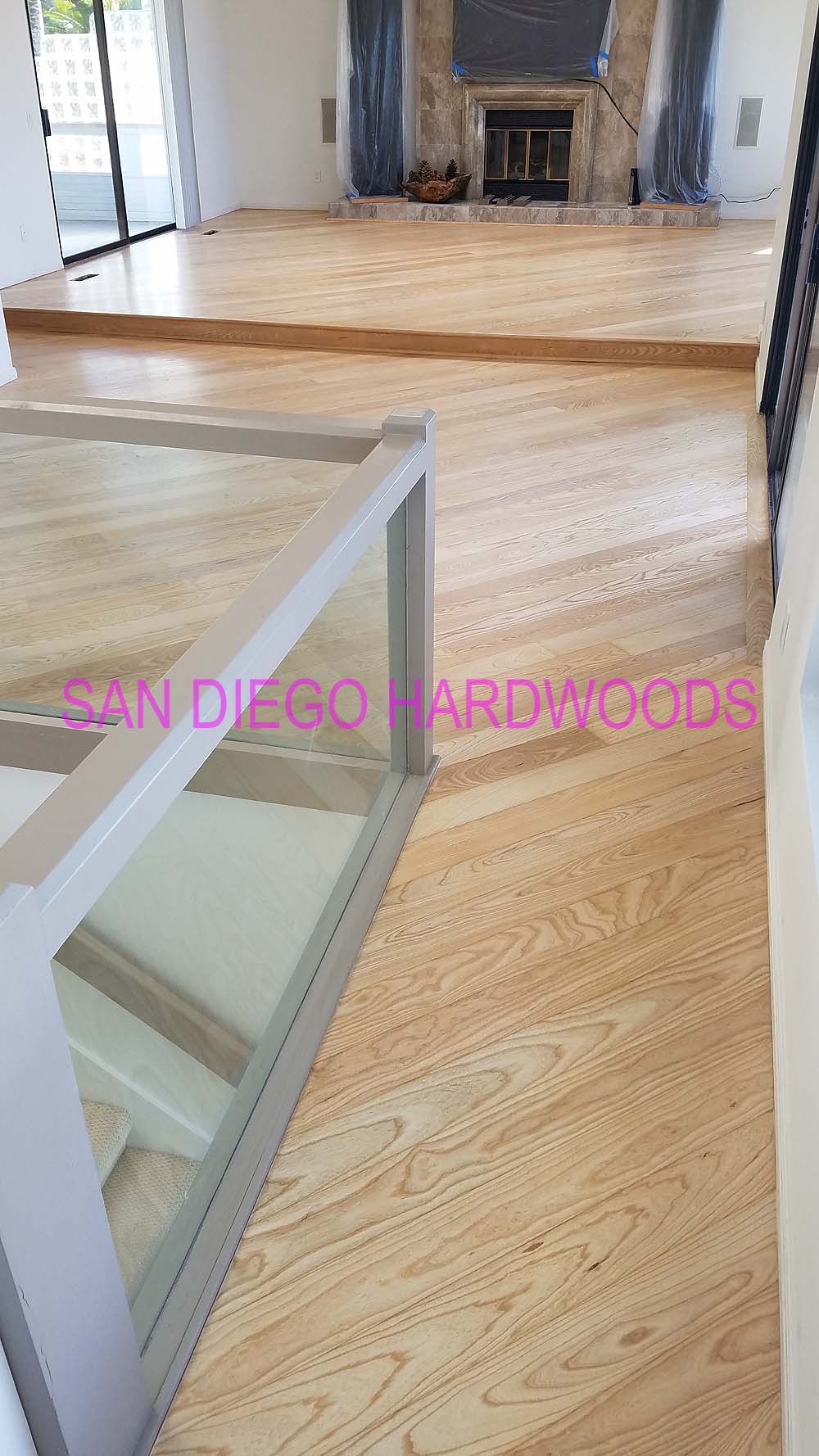
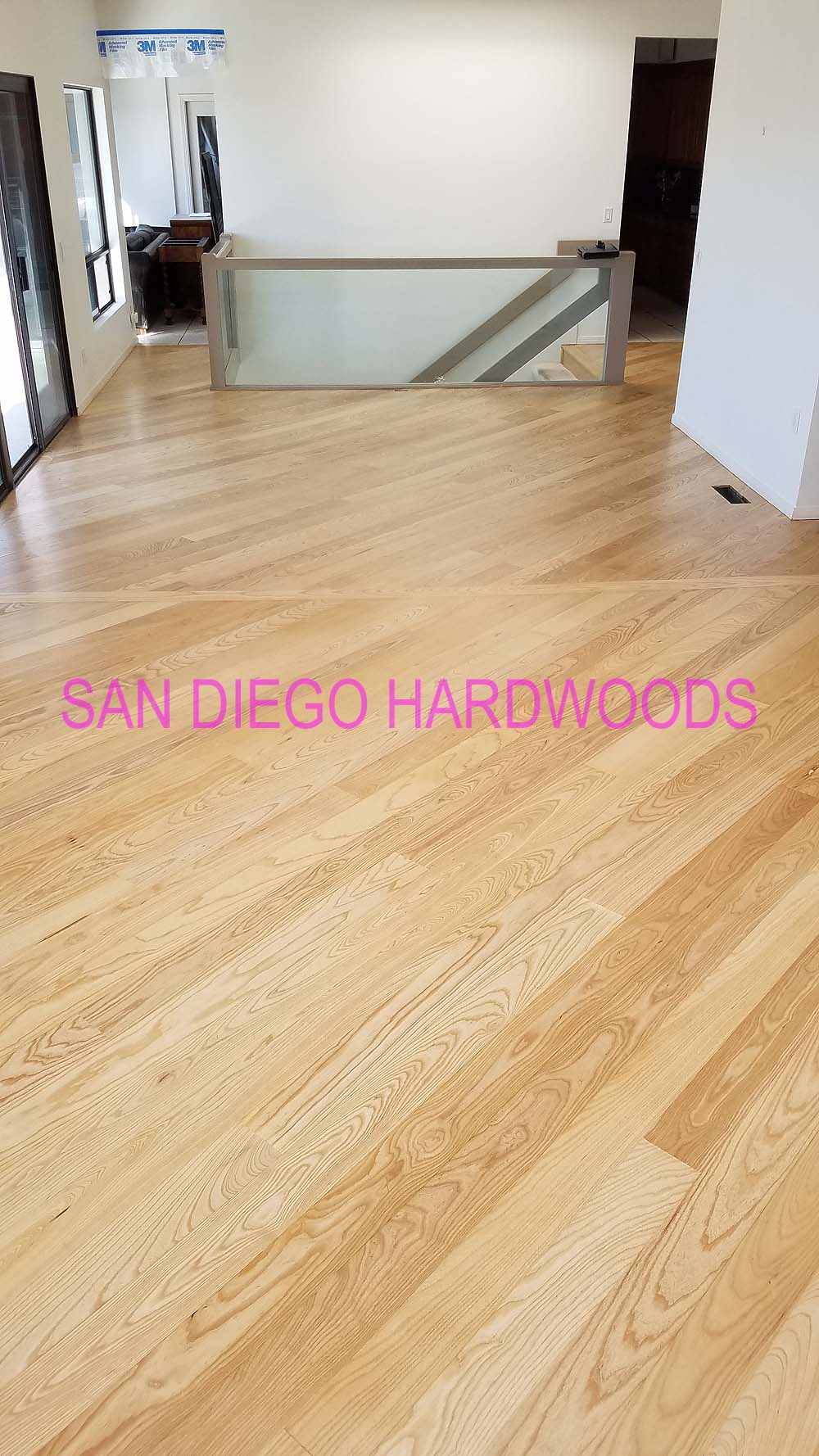
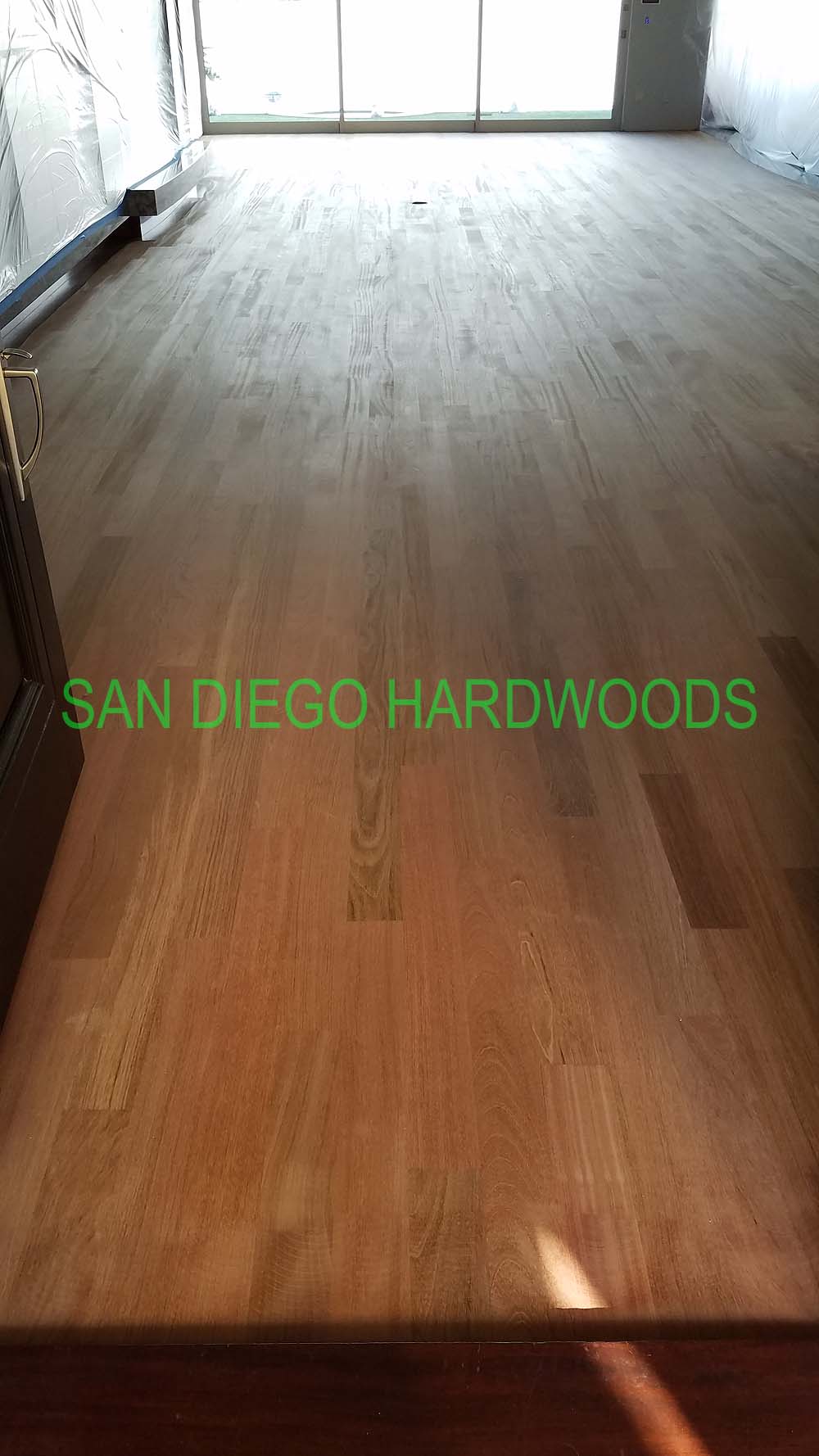
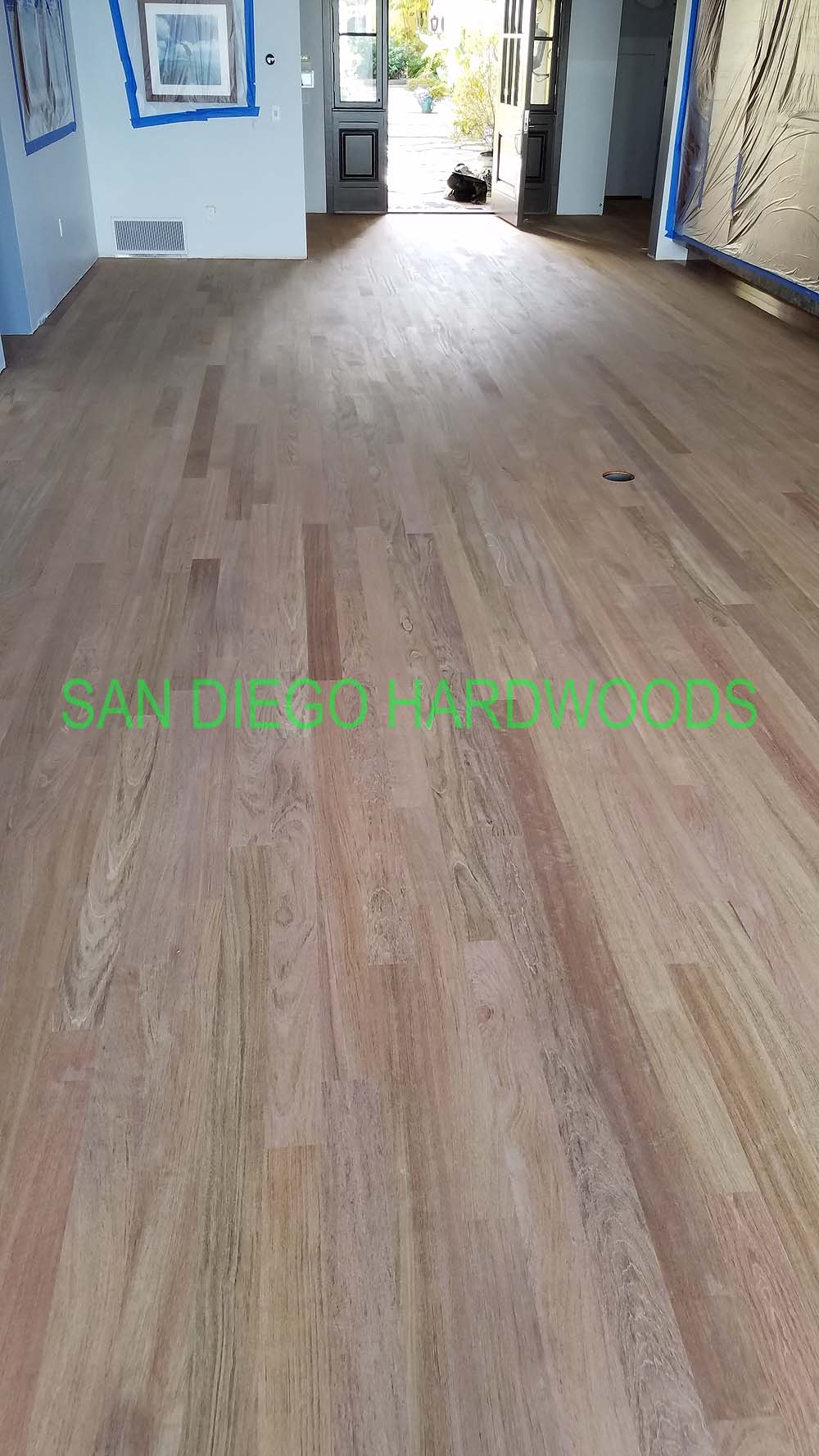
Solid Ash Hardwood Floor Refinishing and Matching Installation in Del Mar
This Del Mar home overlooking the Torrey Pines coastline had a 30-year-old solid ash hardwood floor with extensive finish wear and deep surface damage. The project combined complete hardwood floor refinishing with the installation of new solid ash flooring in adjoining rooms.
Existing Floor Condition
The original polyurethane finish was worn out, cracks had developed between boards and the solid ash flooring required complete sanding and restoration.
Refinishing Process
The existing finish was completely removed, cracks were filled and the floor was prepared for one coat of sealer followed by two coats of commercial-grade Bona water-based polyurethane.
New Matching Installation
New solid ash hardwood flooring was installed in adjacent rooms, then sanded, stained and finished to coordinate with the original flooring.
Del Mar Solid Ash Floor — Installation, Sanding and Finished Results
Select any photograph to view the full-size image. These photographs document the original ash flooring, the new matching installation, the sanding process and the completed satin water-based finish.
Original solid ash hardwood flooring prepared for complete refinishing.
Existing and newly installed ash flooring being sanded into one continuous floor system.
The ash floor after restoration work and preparation for the protective finish system.
Completed solid ash hardwood flooring with the original and new sections finished to coordinate.
The completed project created a continuous solid hardwood floor system with a durable satin finish and a consistent appearance between the restored original flooring and the newly installed ash.
Could Professional Deep Cleaning Restore the Appearance of Your Hardwood or Bamboo Floor?
Cloudiness, sticky residue, embedded dirt, household polish and grime can make a floor appear more damaged than it actually is. Professional deep cleaning with the Bona Power Scrubber may substantially improve suitable hardwood, bamboo, engineered, wire-brushed and matte floors without removing the existing finish.
Deep Cleaning Only
Appropriate when the primary problem is surface contamination, embedded grime, sticky residue or buildup and the existing finish remains serviceable.
Deep Cleaning and Compatible Recoat
A protective maintenance coat may be possible when the existing coating, floor construction and surface condition are compatible and properly prepared.
Complete Sanding and Refinishing
Usually required when finish wear exposes raw wood, deep damage must be removed, the color is changing or the existing coating cannot be safely recoated.
Recoating is not appropriate for every floor. Existing coatings, wax, polish, oil, contamination, remaining wear layer and adhesion must be considered before a new finish is applied.
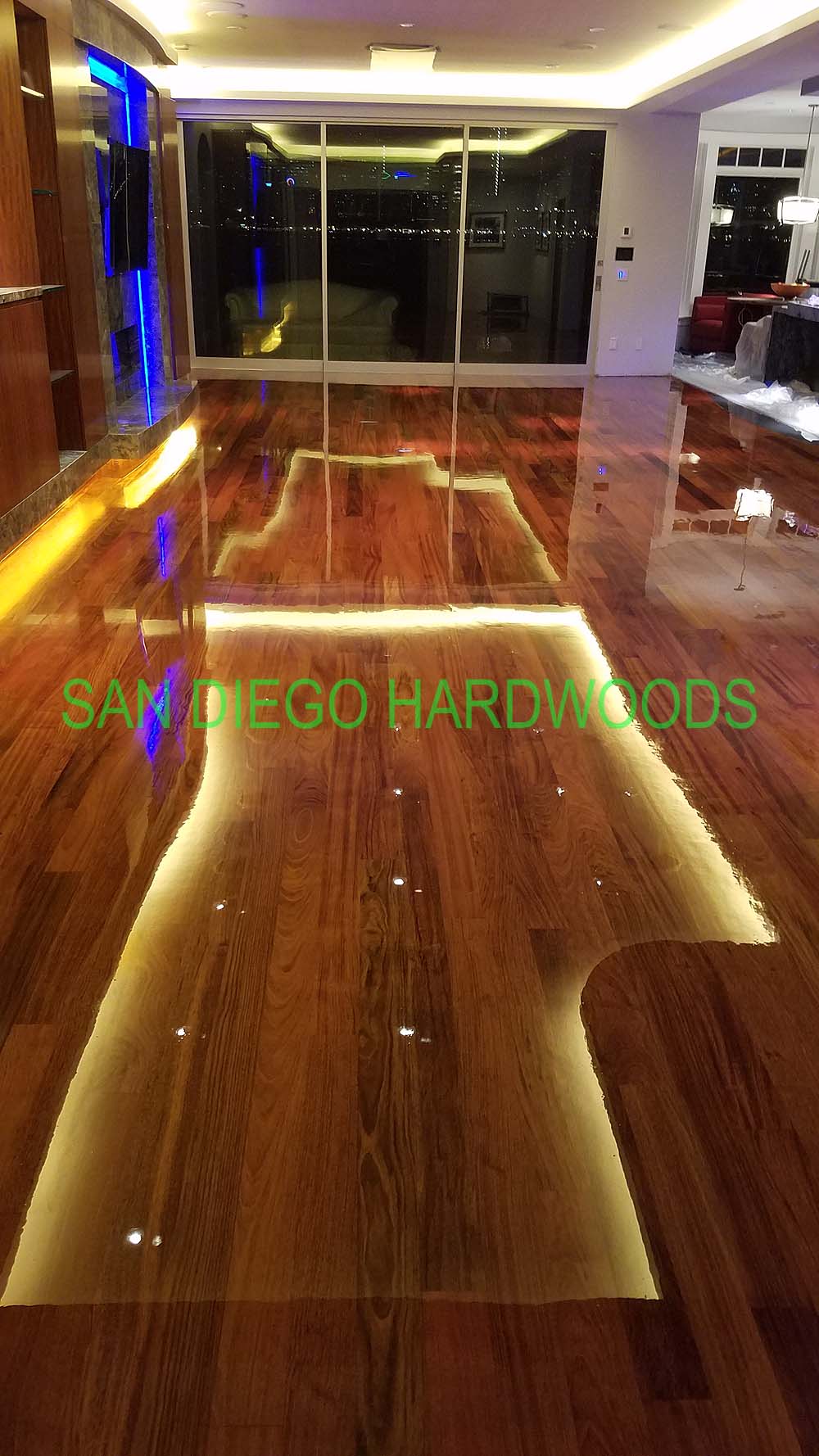
Brazilian Cherry Hardwood Floor Installation and Refinishing in Coronado
This Coronado hardwood flooring project documents the installation, sanding and finishing of Brazilian cherry flooring in a coastal home with views toward downtown San Diego. The work combined skilled installation with professional surface preparation and a durable water-based finish system.
Hardwood Flooring Installation
Brazilian cherry flooring was installed and fitted throughout the living areas before the connected surface was prepared for sanding and site finishing.
Dust-Contained Sanding
The newly installed hardwood was professionally sanded to create a smooth, consistent surface and prepare the Brazilian cherry for its protective finish system.
Water-Based Floor Finish
A professional water-based polyurethane system was applied to protect the flooring while highlighting the natural color, grain variation and depth of the Brazilian cherry.
Coronado Brazilian Cherry Floor — Installation and Finished Results
Select any photograph to view the full-size image. The photos show the installed Brazilian cherry before final finishing and the reflective surface immediately after application of the protective water-based coating.
New Brazilian cherry hardwood flooring installed before the final sanding and finishing stages.
Installed Brazilian cherry boards fitted throughout the living space before final surface preparation.
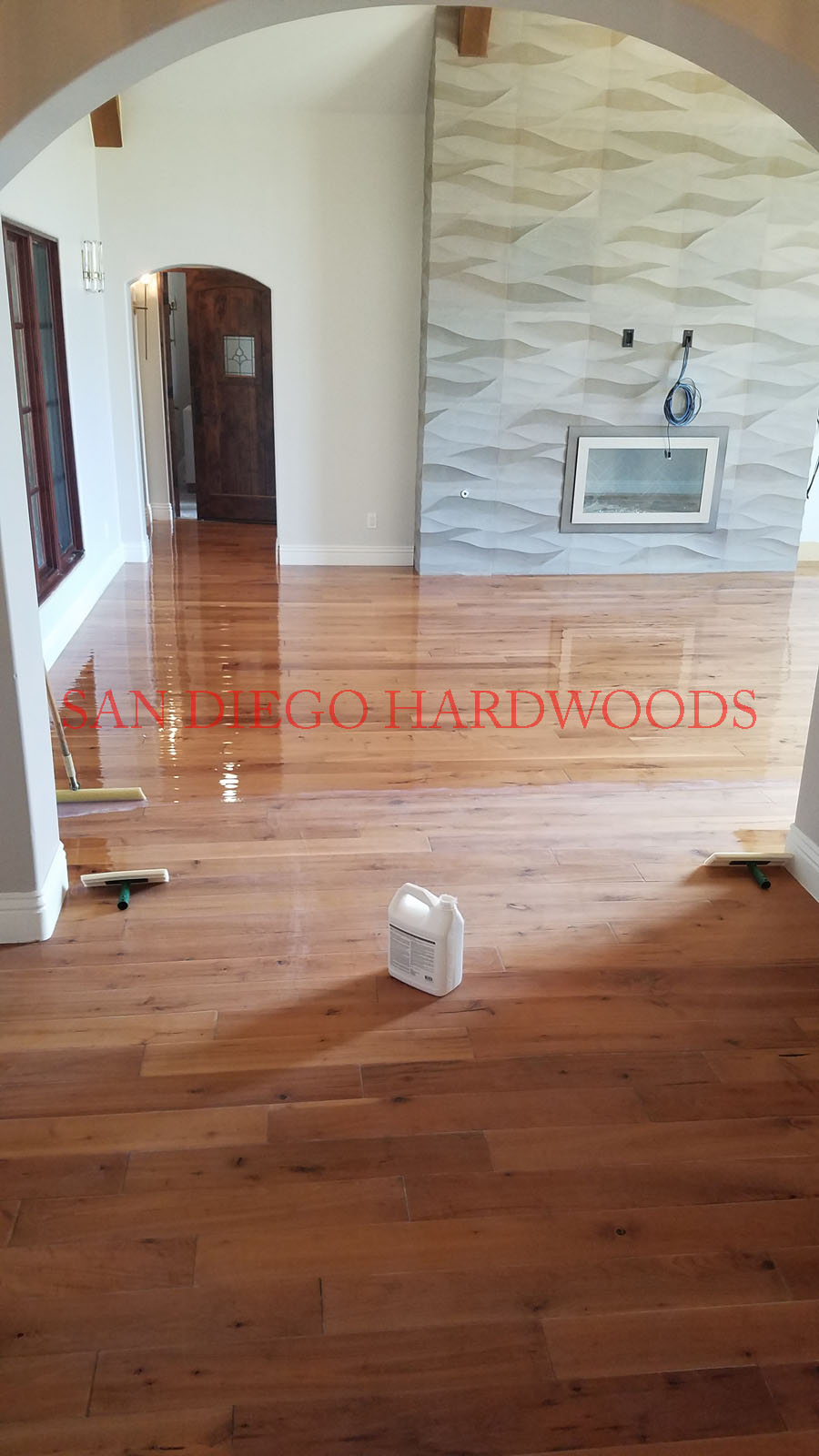
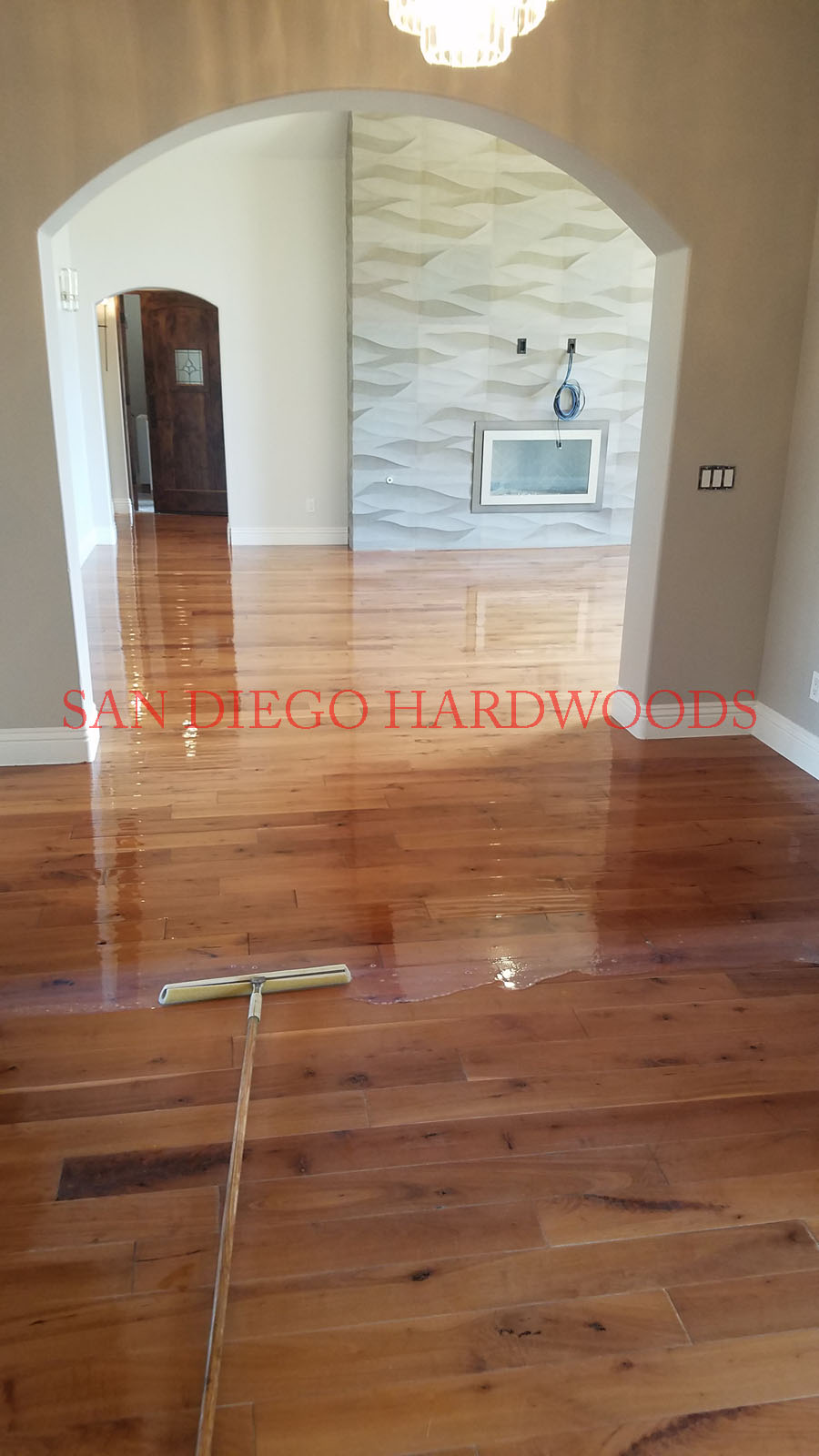
Freshly applied protective finish showing the reflective wet surface before curing.
The completed Brazilian cherry floor after sanding and application of the protective finish system.
The completed floor combines the natural color variation of Brazilian cherry with a smooth professionally sanded surface and a durable water-based protective finish suitable for an active coastal home.
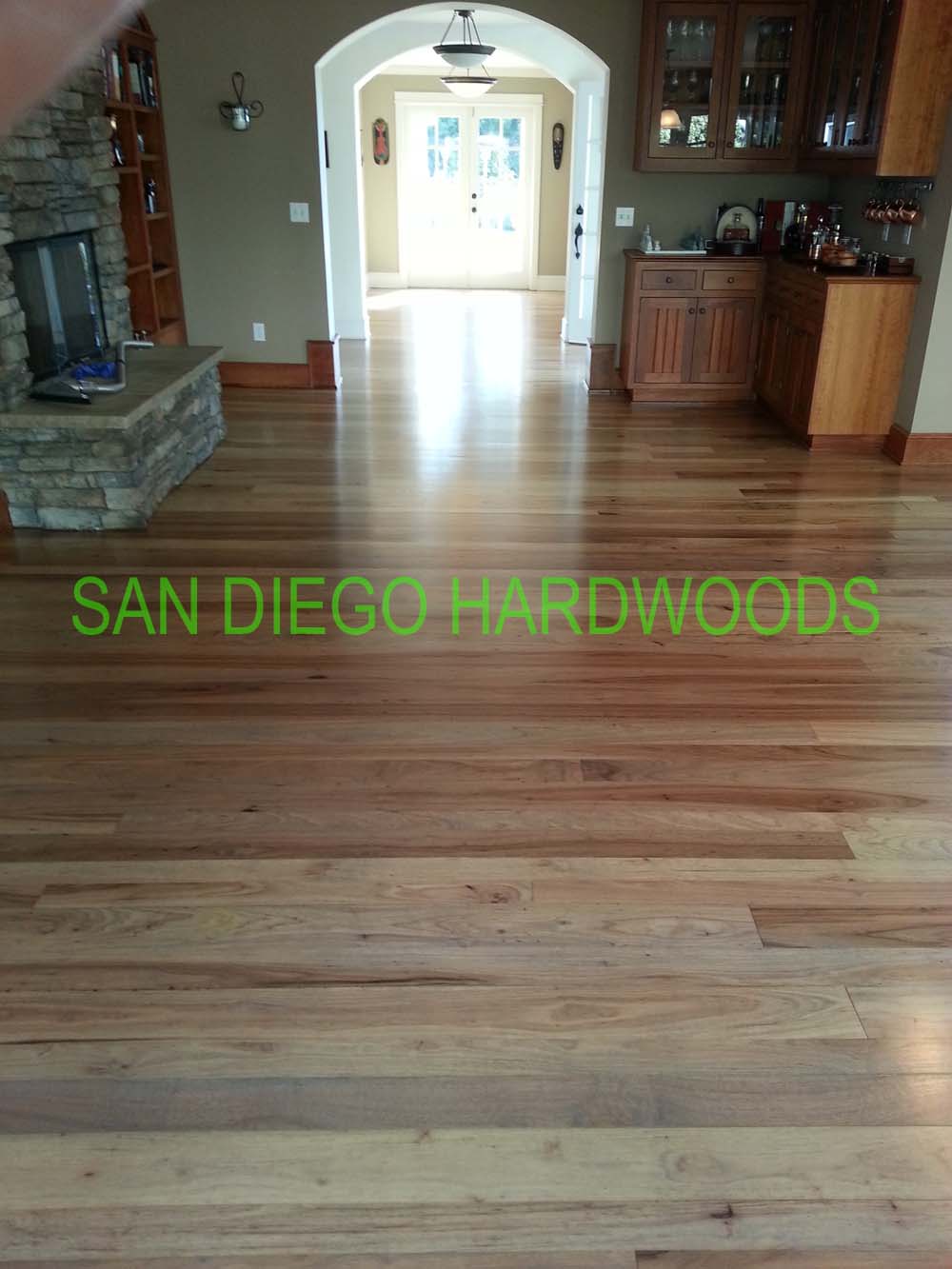
Solid Hickory Hardwood Floor Refinishing, Matching Installation and Butcher-Block Restoration
This Rancho Santa Fe project restored and substantially expanded an existing solid hickory hardwood floor system. The work included dust-contained sanding, custom stain samples, installation of new unfinished hickory flooring and restoration of the kitchen’s existing butcher-block countertop.
Existing Hickory Refinishing
The neglected original hickory floor was professionally sanded with dust-containment equipment, repaired and prepared for owner-reviewed custom stain samples.
New Matching Installation
Carpet was removed and new unfinished solid hickory flooring was installed over the plywood subfloor, approximately doubling the home’s hardwood flooring area.
Connected Site Finishing
The original and newly installed hickory flooring were sanded, stained and protected as a connected system using a durable Bona water-based polyurethane finish.
Butcher-Block Restoration
The kitchen’s existing butcher-block countertop was refinished and protected with the same type of commercial-grade water-based finish used for the hardwood flooring.
Rancho Santa Fe Hickory Flooring and Butcher-Block Project Photos
Select any photograph to open the full-size image. These project photos document the hickory refinishing, newly installed unfinished flooring and restored butcher-block work.
Existing solid hickory flooring during the professional refinishing and surface-preparation process.
Refinished hickory showing its natural grain and the completed custom-colored protective finish.
New unfinished solid hickory installed in former carpeted areas before connected sanding and finishing.
The restored kitchen butcher block coordinated with the refinished and expanded hickory floor system.
The completed project connected the original hickory floor with the newly installed flooring, increased the home’s continuous hardwood area and restored the kitchen butcher block as part of one coordinated wood-finishing project.
Hardwood Floor Board Replacement and Refinishing After Termite Damage
This Del Mar hardwood floor had multiple boards damaged by termites. The restoration required selective board replacement, localized filling and complete sanding and refinishing so the repaired areas would blend into the surrounding solid wood floor.
Damage Evaluation
The floor was examined to identify boards requiring complete replacement and smaller damaged areas that could be stabilized and filled during the restoration process.
Matching Board Replacement
The most severely damaged boards were carefully removed and replaced using matching flooring appropriate to the age and appearance of the existing floor.
Localized Hole Repair
Smaller holes and isolated damaged areas were repaired with carefully applied wood filler before the connected floor was sanded.
Complete Refinishing
After the board repairs were completed, the hardwood floor was sanded and protected with a commercial-grade Bona water-based polyurethane finish.
Del Mar Hardwood Floor Repair Before Complete Refinishing
Select the photograph to open the full-size image. It documents the solid wood floor during the damaged-board repair and surface-preparation stage.
Damaged solid wood boards being repaired and replaced before the Del Mar floor was completely sanded and refinished.
The completed repair combined matching replacement boards with localized filling and full-floor refinishing to produce a continuous surface protected by a durable water-based polyurethane finish.
San Diego Hardwoods performs hardwood floor board replacement, damage repair and dust-contained refinishing for suitable floors throughout Del Mar, La Jolla, Solana Beach, Carmel Valley, Encinitas and surrounding San Diego County communities.
Hardwood Floor Installation and Refinishing Projects in San Diego
These scanned during-and-after photographs document six real San Diego hardwood flooring installations. The projects include wide-plank French oak glued directly to a concrete slab, unfinished flooring nailed to plywood, traditional strip oak, random-width red oak, prefinished white oak and engineered wide-plank oak installed over a prepared subfloor.
Installing hardwood floors correctly requires more than placing boards. Subfloor preparation, moisture conditions, fastening or adhesive selection, precise fitting, sanding, staining and finishing all affect the completed floor. San Diego Hardwoods performs both hardwood floor installation and wood floor refinishing in San Diego, including site-finished floors prepared with 100% dust containment and modern planetary sanding equipment when applicable.
These are original project photographs scanned as paired images, with the installation or preparation stage on the left and the completed floor on the right. One project is preserved from the owner’s original mid-1990s photo book, long before digital cameras became standard.
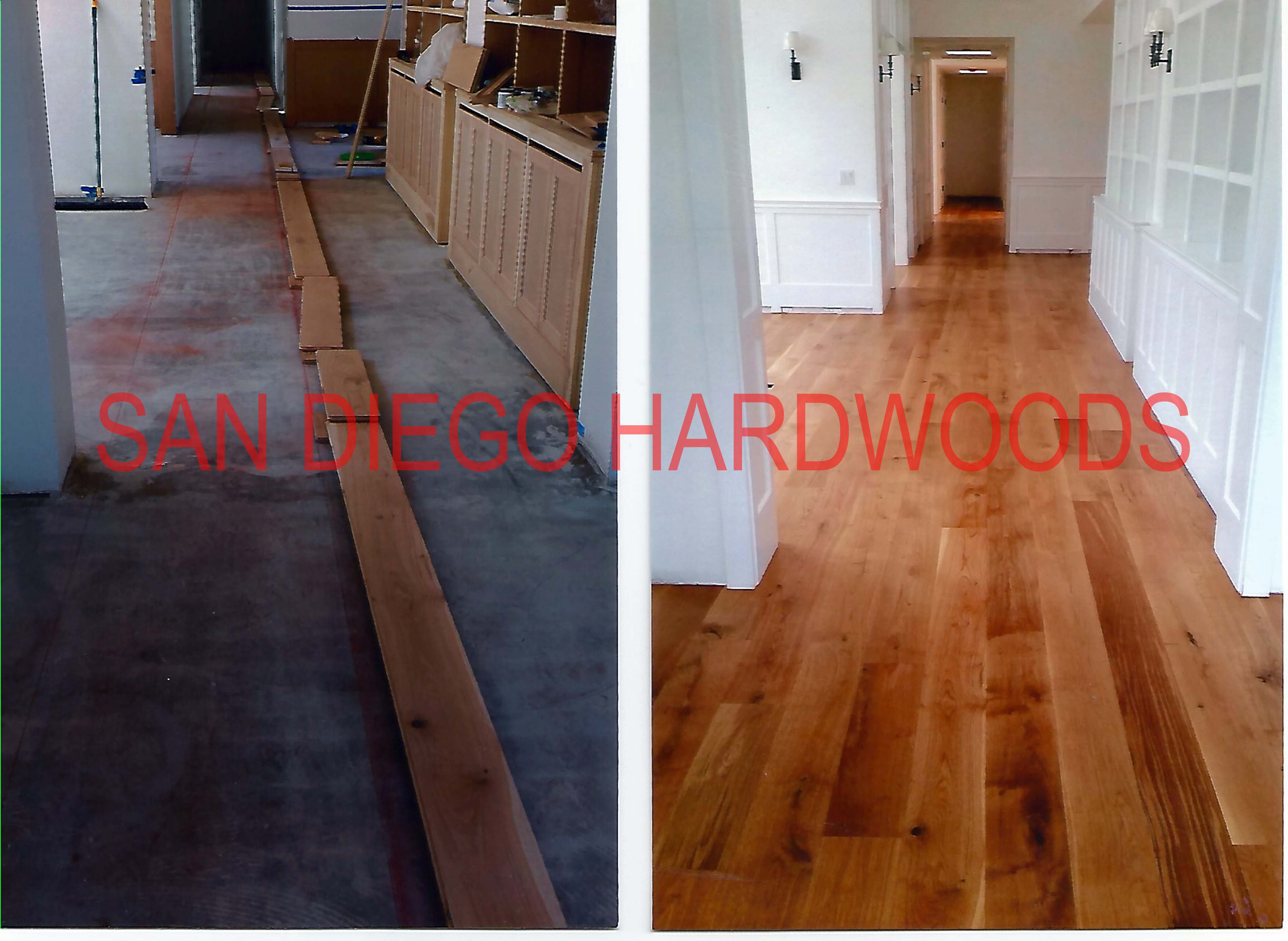
Installation Project 1 — La Jolla
Glue-Down Wide-Plank French Oak Flooring Over a Concrete Slab
Unfinished light-rustic French oak was glued directly to the concrete slab in this La Jolla home. After installation, the wide-plank flooring was professionally sanded and finished on site to produce a smooth, continuous floor.
Left side: French oak glue-down installation in progress. Right side: the installed, sanded and finished wide-plank floor.
La Jolla unfinished French oak flooring installed by the glue-down method and then sanded and finished on site.
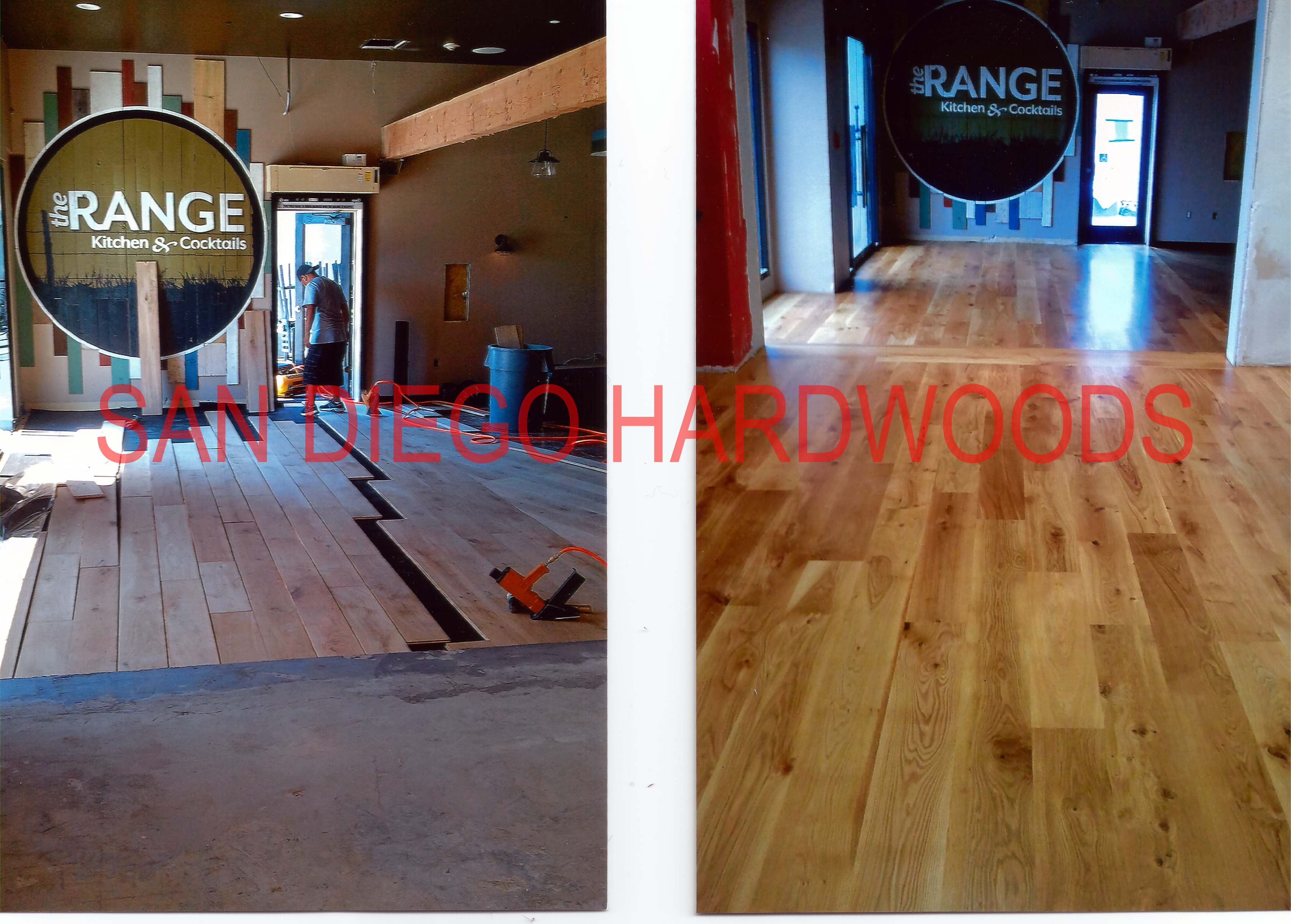
Installation Project 2 — San Diego County
Nail-Down Light-Rustic French Oak Flooring Over Plywood
The same type of unfinished light-rustic French oak was installed using a traditional nail-down method over a plywood subfloor. The unfinished wood was then sanded and finished after installation so the connected floor could be leveled and protected as one surface.
Left side: nail-down French oak installation over plywood. Right side: the completed site-finished wide-plank floor.
Unfinished light-rustic French oak nailed to plywood before professional sanding and site finishing.
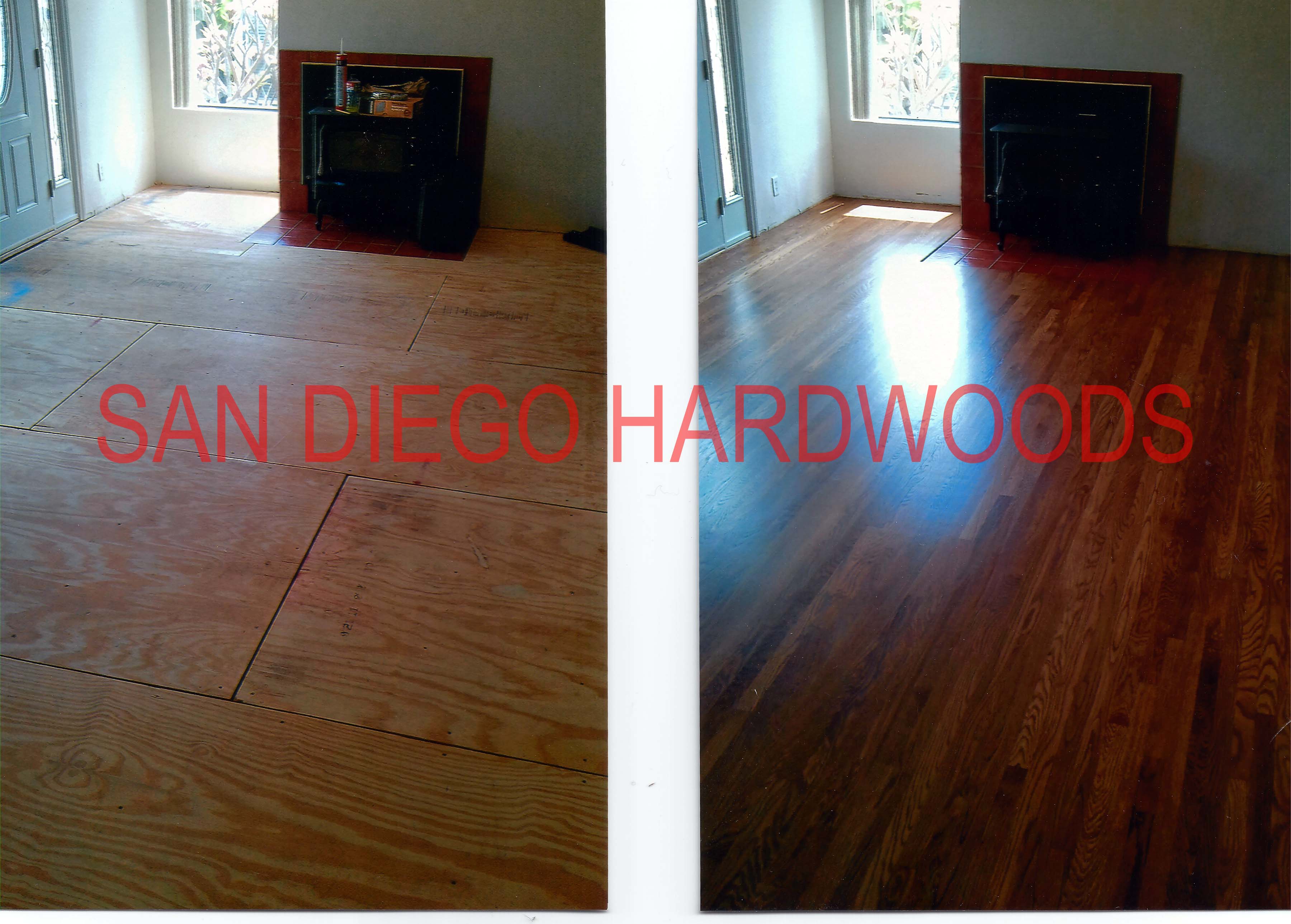
Installation Project 3 — Mission Hills
Plywood Subfloor Preparation and Nail-Down Strip-Oak Installation
This Mission Hills project began with newly installed plywood prepared to receive traditional nail-down strip oak. After the oak flooring was installed, the connected surface was sanded, custom stained and protected with a professional floor-finish system.
Left side: new plywood subfloor ready for strip-oak installation. Right side: the installed oak after sanding, staining and finishing.
Mission Hills plywood preparation followed by nail-down strip-oak installation, sanding, custom staining and finishing.
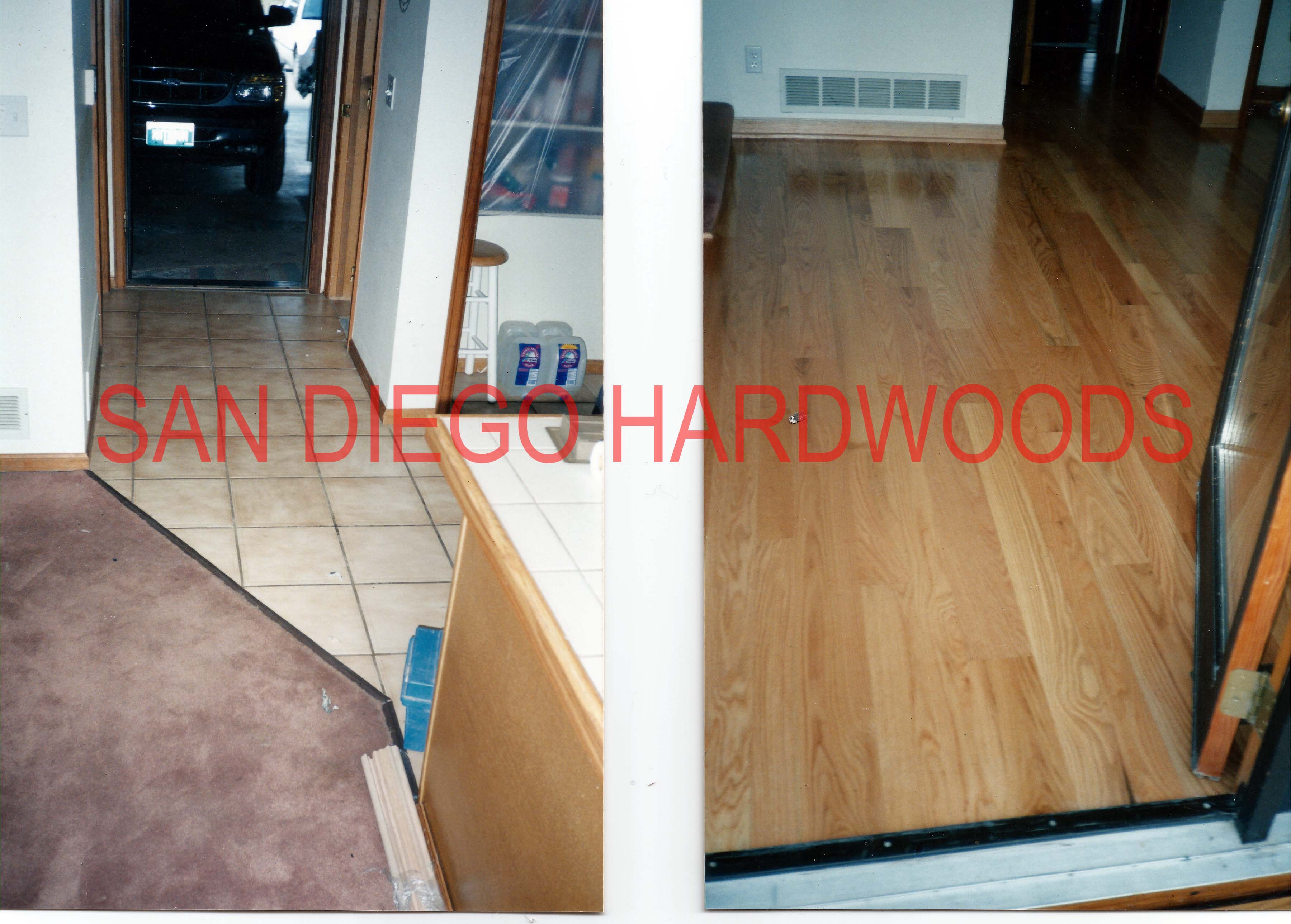
Installation Project 4 — San Diego
Tile and Carpet Removal Followed by Random-Width Select Red Oak
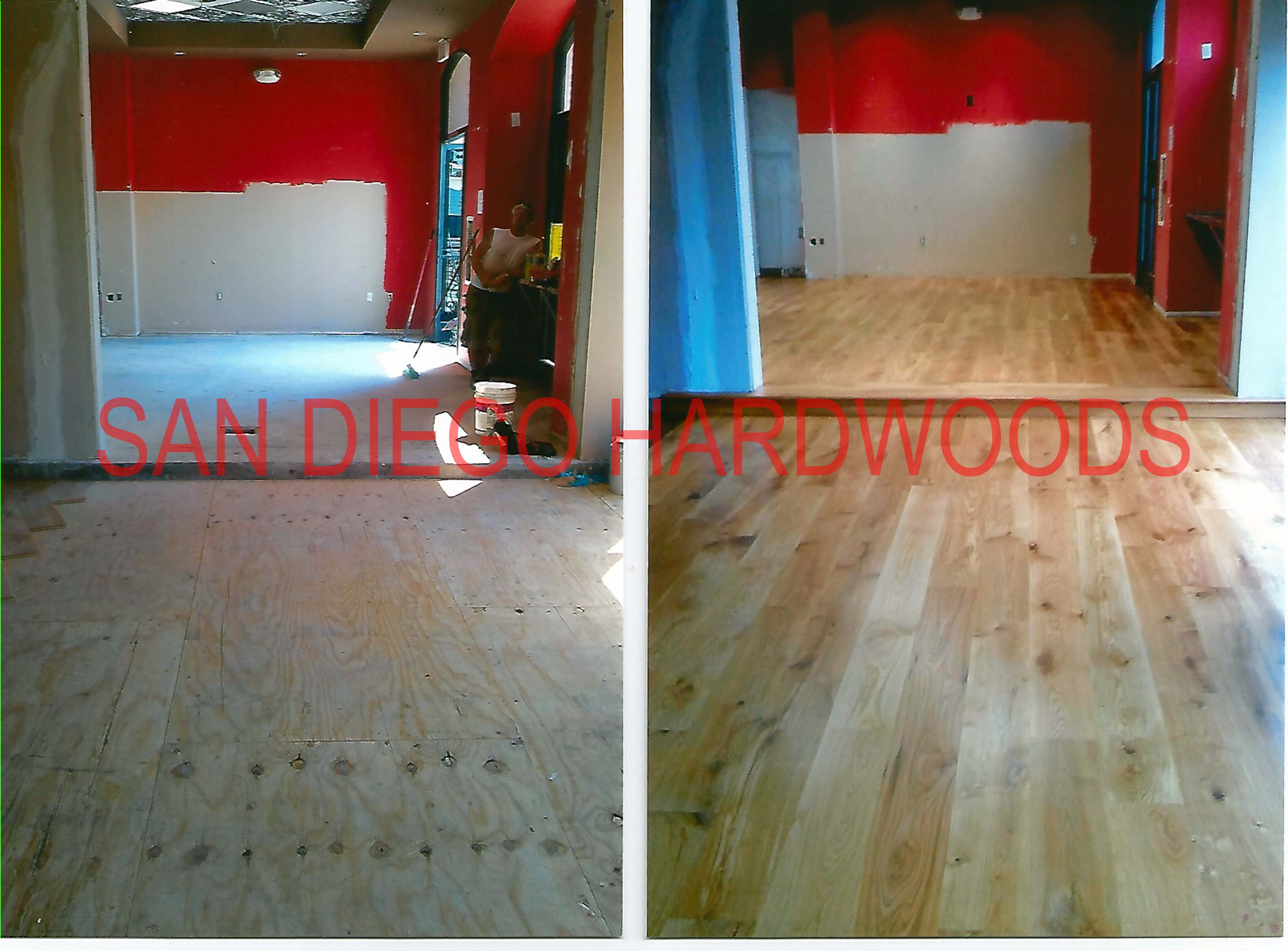
The original tile and carpet were removed before the floor system was prepared for new hardwood. Random-width, select-grade red oak was then installed to replace the mixed flooring surfaces and create a continuous real-wood floor.
Left side: the rooms before removal of the existing tile and carpet. Right side: the completed random-width select-grade red oak installation.
Tile and carpet replaced with a continuous random-width select-grade solid red oak hardwood floor.
Installation Project 5 — Point Loma Near Sunset Cliffs
Prefinished Solid White Oak Nailed to a Plywood Subfloor
This Point Loma installation near Sunset Cliffs used solid prefinished white oak flooring nailed to the plywood subfloor. Because the factory finish was already applied, careful fitting and fastening were essential to prevent visible installation damage.
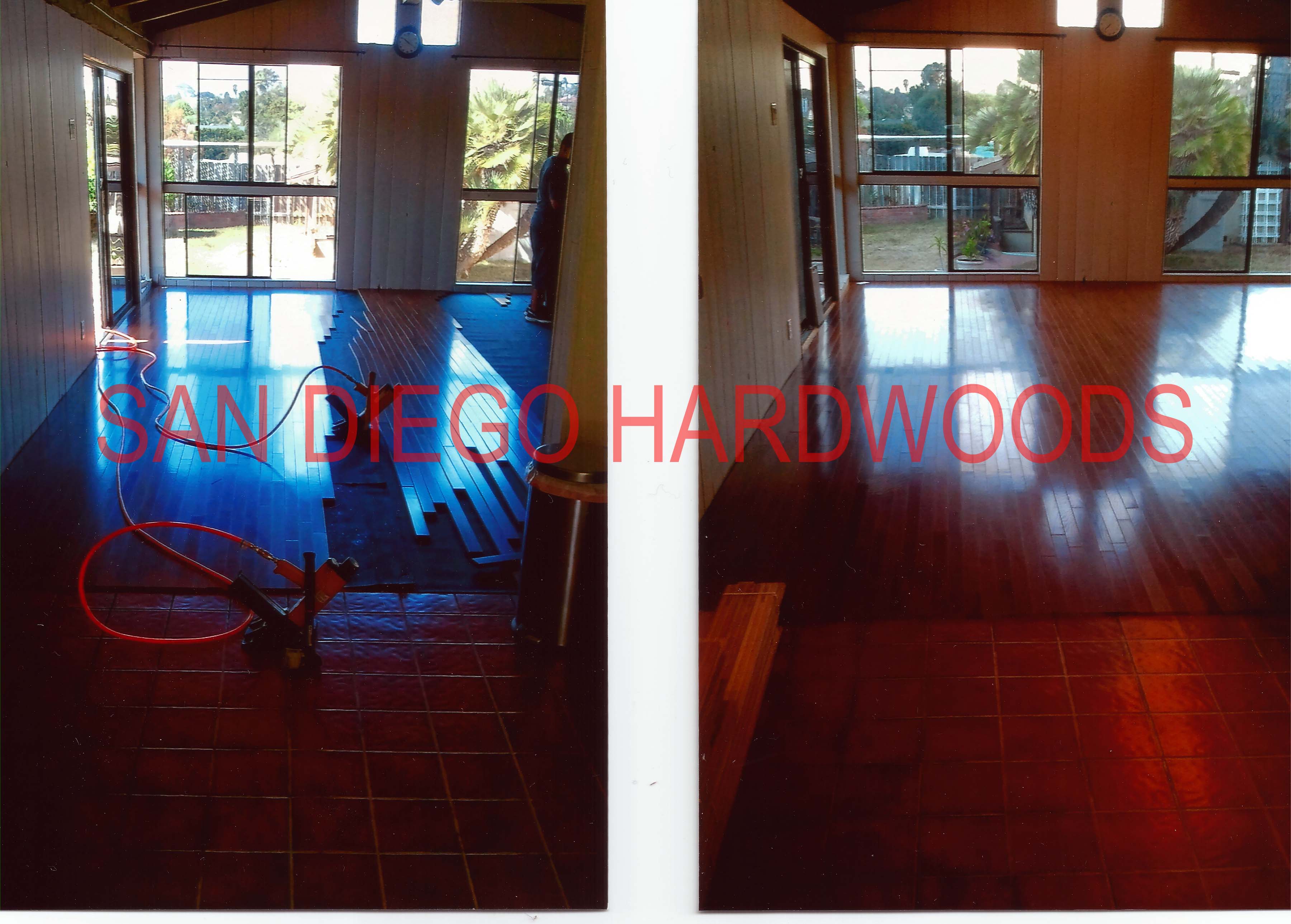
Left side: the solid white oak installation partially completed. Right side: the finished room after the nail-down installation was completed.
Solid prefinished white oak installed by the nail-down method over plywood in Point Loma near Sunset Cliffs.
Installation Project 6 — San Diego
Plywood Over Concrete With Site-Finished Engineered Wide-Plank Oak
Plywood was installed over the concrete subfloor to create the required installation surface. New engineered wide-plank oak flooring was then installed, sanded exceptionally flat with modern planetary sanding equipment and finished using a process supported by 100% dust containment.
Left side: plywood installed over the concrete subfloor. Right side: the completed engineered wide-plank oak after installation, precision sanding and finishing.
Engineered wide-plank oak installed over a plywood substrate, then sanded with 100% dust containment and professionally finished.
These six projects show the difference between glue-down and nail-down hardwood flooring, solid and engineered construction, prefinished and site-finished wood, and installation over both plywood and concrete subfloors. They also demonstrate how proper installation preparation supports flatter sanding, more consistent staining and longer-lasting hardwood floor refinishing results.
Project 6 — Hardwood Floor Movement and Maintenance
Seasonal Shrinkage, Gaps and Cracks in Coastal and Inland San Diego Hardwood Floors
San Diego is famous for sunshine, but the moisture conditions affecting hardwood flooring can vary dramatically between coastal neighborhoods and inland valleys. During cooler or drier periods, solid wood flooring naturally releases moisture, contracts across the width of the boards and may develop visible gaps, cracks or separation between adjoining planks.
Along the coast in Coronado, Point Loma, La Jolla, Del Mar, Solana Beach and Encinitas, ocean influence may moderate rapid humidity changes, although seasonal movement can still occur. Just a few miles inland, homes in Carmel Valley, Mission Hills, Rancho Santa Fe, Rancho Bernardo, Scripps Ranch and Poway can experience stronger temperature and moisture swings. Farther inland in Escondido, Ramona, Alpine and El Cajon, hotter and drier conditions can make hardwood floor shrinkage, open joints, cracking and separation more noticeable.
Coastal San Diego Hardwood Floors
Coronado, Point Loma, La Jolla, Del Mar, Solana Beach and Encinitas homes may benefit from the moderating influence of coastal humidity, but direct sunlight, heating, air conditioning and seasonal dry periods can still cause solid hardwood boards to move.
Central and Inland Communities
Carmel Valley, Mission Hills, Rancho Santa Fe, Rancho Bernardo, Scripps Ranch and Poway often experience wider temperature changes that can increase seasonal board movement, especially where indoor humidity is not controlled.
Hotter and Drier Inland Areas
Escondido, Ramona, Alpine and El Cajon hardwood floors may experience more visible drying, shrinkage and separation during extended hot weather or when air conditioning lowers the home’s interior humidity.
Does a Gapped Hardwood Floor Need Cleaning, Repair, Recoating or Complete Refinishing?
Seasonal Monitoring and Humidity Control
Small gaps that appear during a dry season may partially close when moisture levels return. In some homes, stabilizing indoor humidity and monitoring the floor through changing seasons may be more appropriate than immediately filling every opening.
Deep Cleaning and Compatible Recoating
When the finish remains serviceable but the flooring is dull, dirty or contaminated, professional deep cleaning may restore clarity. A compatible maintenance coat may then protect suitable floors without complete sanding.
Gap, Crack or Board Repair
Persistent openings, split boards, loose sections, damaged edges or localized flooring failures may require targeted filling, board replacement or other repairs after the movement and moisture conditions are evaluated.
Complete Hardwood Floor Refinishing
When raw wood is exposed, finish wear is extensive, deep damage must be removed or widespread repairs must be blended together, complete sanding and refinishing may provide the most durable restoration.
Seasonal gaps should not automatically be filled without first considering whether the floor may expand again. Wood species, board width, subfloor construction, moisture readings, indoor humidity, the size and persistence of the gaps and the time of year all affect the correct repair decision.
Carmel Valley Hardwood Floor Deep Cleaning, Gap Repair and Recoating
These four photographs document a Carmel Valley hardwood flooring maintenance and restoration project involving seasonal shrinkage, professional deep cleaning, repair of appropriate openings and application of a protective water-based maintenance finish. Select any photograph to open the full-size image.
Carmel Valley hardwood flooring evaluated for seasonal movement, embedded contamination, open joints and the appropriate level of maintenance or repair.
The hardwood surface after deep cleaning and preparation for a compatible protective maintenance coat.
A detailed project view showing the cleaned hardwood flooring and appropriate repairs made before recoating.
The completed Carmel Valley hardwood floor after deep cleaning, appropriate gap repair and protective satin recoating.
San Diego Hardwoods has repaired, maintained and refinished wood floors throughout coastal and inland San Diego County for decades. Homeowners searching for hardwood floor repair in San Diego, hardwood floor refinishing San Diego, wood floor refinishing San Diego or professional care for San Diego hardwood floors often need help determining whether visible gaps are temporary seasonal movement or evidence of a permanent flooring problem. When complete refinishing is required, the floor can be repaired, sanded flat with modern equipment using 100% dust containment and protected with a durable water-based finish system. When the floor is too damaged to restore, matching board replacement or new solid, engineered, bamboo, oak, maple, hickory, Brazilian cherry or wide-plank French oak installation may be considered.
Common Questions About Seasonal Hardwood Floor Gaps
Why do hardwood floor gaps become larger during dry weather?
Wood releases moisture and contracts when surrounding air becomes drier. Solid hardwood flooring moves primarily across the width of each board, so multiple small changes can create visible openings throughout a room.
Should every seasonal gap be filled immediately?
No. A gap that opens during a dry period may narrow when indoor moisture rises. Filling a temporary seasonal opening can create pressure or raised filler when the wood expands again, so the floor and moisture conditions should be evaluated first.
Can deep cleaning improve a floor that looks dry, dull or damaged?
Professional deep cleaning can remove embedded dirt, residue and contamination that make a floor look worse than it is. Deep cleaning cannot reverse structural damage, but it can reveal the true condition of the finish and help determine whether cleaning, recoating, repair or complete refinishing is appropriate.
When is complete hardwood floor refinishing necessary?
Complete refinishing may be necessary when the finish is worn through to raw wood, deep scratches or discoloration must be removed, widespread repairs must be blended together or the existing coating cannot accept a reliable maintenance recoat.
Restoring Factory-Distressed, Hand-Scraped and Textured Hardwood Floors in San Diego
Thousands of factory-distressed and hand-scraped hardwood floors were installed in San Diego homes during the last several decades. Many were manufactured with a hard factory-applied aluminum-oxide coating and a deliberately uneven surface designed to reproduce the character of aged, hand-worked wood.
After years of foot traffic, sunlight, pets, cleaning products, moisture exposure and normal household use, the factory coating can become dull, scratched, faded, cloudy or worn through in high-traffic areas. Restoring these textured hardwood floors requires a different approach from conventional sanding because aggressively flattening the surface may remove the hand-scraped character that made the flooring distinctive.
Worn Aluminum-Oxide Finish
Factory-applied aluminum-oxide finishes can be extremely durable, but once they begin to fail they may develop dull traffic lanes, scratches, loose coating, uneven sheen and areas where the wood color no longer appears consistent.
Sun Fading and Uneven Color
Windows, rugs, furniture and direct San Diego sunlight can create substantial color differences. Exposed sections may fade while protected areas retain the original darker or warmer factory color.
Textured Surface Contamination
Dirt, oils, cleaning residue and polish can collect inside wire-brushed grain, hand-scraped contours, beveled edges and intentionally distressed low areas where ordinary household cleaning does not reach.
Localized Water or Pet Damage
Water exposure, pet wear, scratches and damaged boards may require localized repair, color correction or board replacement before a protective maintenance finish can be considered.
How Factory-Distressed and Hand-Scraped Hardwood Floors Are Professionally Restored
1. Floor Evaluation and Testing
The flooring construction, existing coating, contamination, remaining finish, texture, color and damaged areas must be evaluated before deciding whether deep cleaning, abrasion, recoloring, recoating or complete refinishing is appropriate.
2. Intensive Deep Cleaning
Professional cleaning removes embedded dirt, household residue, polish, oils and contaminants from the textured surface, grain, scraped contours and beveled board edges.
3. Controlled Surface Abrasion
Loose or failing portions of the factory coating are carefully abraded while preserving as much of the original hand-scraped or distressed wood profile as the condition of the floor allows.
4. Color Correction
Worn, faded and uneven areas may be recolored to improve consistency and restore visual depth without unnecessarily sanding the entire textured surface flat.
5. Compatible Protective Recoat
After testing and preparation, suitable floors may receive a compatible commercial-grade Bona water-based polyurethane maintenance coat to restore sheen and extend the useful life of the flooring.
6. Repairs When Required
Loose boards, damaged planks, open joints, water-damaged sections and other localized failures may need repair or board replacement before the connected floor is prepared for recoating.
Not every factory-distressed floor can be restored with the same process. Wax, polish, oil, silicone contamination, severe coating failure, exposed raw wood, deep damage and adhesion problems can make recoating unreliable. The existing finish and floor construction must be tested before a new water-based coating is applied.
Distressed and Hand-Scraped Hardwood Floor Repair, Recoloring and Recoating Photos
These photographs document professional San Diego hardwood flooring restoration work involving textured factory-finished floors, worn aluminum-oxide coatings, deep cleaning, controlled abrasion, color restoration and compatible protective recoating. Select any photograph to open the full-size image.
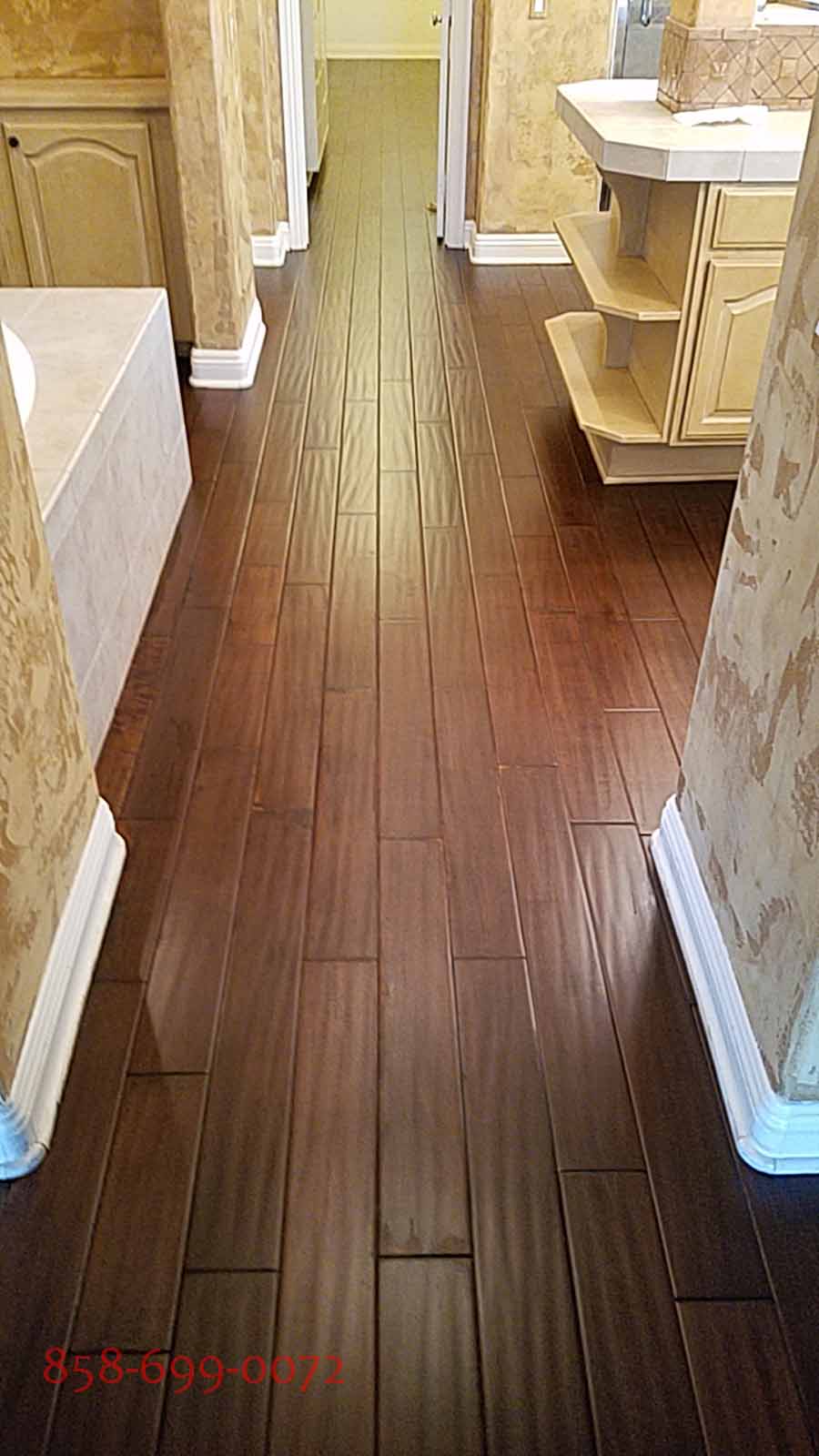
Factory-distressed hardwood flooring undergoing a restoration process designed to preserve the hand-scraped texture while improving the worn coating and uneven color.
A North County San Diego distressed-floor project involving worn finish, uneven color and repair of the textured hardwood surface before protective recoating.
Scraped and textured hardwood flooring restored by cleaning, repairing and recoloring the surface while retaining its original distressed character.
Homeowners looking for hardwood floor repair in San Diego, hardwood floor refinishing San Diego, wood floor refinishing San Diego or restoration of factory-distressed San Diego hardwood flooring may not need conventional complete sanding. When the wood remains structurally sound and the existing coating can be prepared reliably, professional deep cleaning, controlled abrasion, color restoration and compatible recoating may extend the life of hand-scraped hardwood floors without removing their intentionally textured appearance. Floors with extensive raw-wood exposure, severe damage or incompatible contamination may instead require more substantial repair, board replacement or complete refinishing.
San Diego Hardwoods evaluates and restores suitable factory-distressed, wire-brushed, hand-scraped and textured hardwood floors throughout Pacific Beach, Point Loma, North Park, Mission Hills, Carmel Valley, Rancho Santa Fe, Carlsbad, Encinitas, Solana Beach, Del Mar, La Jolla and surrounding San Diego County communities.
Common Questions About Hand-Scraped and Distressed Hardwood Floors
Can hand-scraped hardwood floors be refinished?
Many can be restored, but the correct process depends on the construction of the flooring, the depth of the wear layer, the condition of the factory coating and whether the homeowner wants to retain the original scraped texture. Complete flat sanding may remove much of that intentional character.
Can an aluminum-oxide factory finish be recoated?
Some aluminum-oxide finishes may accept a new compatible coating after extensive cleaning, controlled abrasion and adhesion testing. Wax, polish, oil, silicone residue and other contamination can prevent reliable adhesion, so testing and preparation are essential.
Can faded hand-scraped flooring be recolored?
Suitable floors can sometimes be color-corrected after professional cleaning and preparation. The achievable result depends on the existing coating, wood species, amount of fading, exposed raw wood and the depth and pattern of the original distressing.
When does a distressed hardwood floor need complete sanding?
Complete refinishing may be required when the finish has worn through extensively, deep scratches or discoloration must be removed, major repairs need to be blended or the existing factory coating cannot be prepared for a reliable maintenance recoat.
Project 8 — Rental Home Hardwood Floor Restoration
Filthy Solid Red Oak Floors in a San Diego Rental Home Restored to Better Than New
The solid red oak floors in this rental home were so heavily contaminated with ground-in dirt, neglected finish and years of tenant wear that large portions of the wood appeared black. The original red oak grain and natural color were almost completely hidden beneath the damaged surface.
Solid red oak is one of the most durable and restorable hardwood flooring materials found in San Diego homes. Even when an old floor looks grey, black, dirty and permanently ruined, the damage may be concentrated in the worn finish and upper wood surface. In this rental property, ordinary cleaning could no longer restore the floor because the protective coating had worn away and dirt had become embedded directly into the exposed red oak.
Black Ground-In Dirt
Years of heavy use and inadequate floor maintenance left the red oak looking nearly black in the highest-traffic areas, with embedded dirt extending beyond what household cleaning could remove.
Completely Worn Finish
The original polyurethane protection had worn through in numerous areas, allowing grime, moisture and normal rental-property traffic to contact and discolor the exposed wood.
Grey and Dull Wood
Where the finish had failed, the unprotected red oak had become dull, grey and lifeless instead of showing the warm natural color and grain normally associated with solid oak flooring.
Restoration Instead of Replacement
Because the flooring was real solid red oak with sufficient material remaining, complete hardwood floor refinishing offered a better solution than covering or replacing the original wood.
How the Filthy Rental-Home Red Oak Floor Was Completely Restored
1. Home and Floor Preparation
The work area was prepared for professional sanding so the neglected finish, embedded dirt and damaged upper surface could be removed without spreading uncontrolled dust through the rental home.
2. 100% Dust Containment
Professional dust-containment equipment captured the sanding dust at the source while the old coating, black contamination, surface wear and discolored wood were removed.
3. Complete Hardwood Sanding
Modern floor-sanding equipment progressively removed the failed finish and contaminated surface, revealing clean solid red oak with its natural color and grain still intact underneath.
4. Detailed Edge and Surface Work
Edges, corners and connected flooring areas were carefully prepared so the restored red oak would have a consistent appearance throughout the rooms.
5. Natural Red Oak Sealer
The clean raw wood was sealed to bring out the natural warmth, grain variation and recognizable red oak character rather than hiding it beneath the accumulated dirt.
6. Modern Protective Finish
Modern water-based polyurethane floor finishes were applied to create a durable, cleaner-looking and easier-to-maintain surface suitable for continued use as a rental property.
The transformation was completed with 100% dust-containment equipment and modern sanding and finishing systems. Instead of filling the home with the uncontrolled airborne dust associated with older floor-sanding methods, the containment system captured sanding debris while the blackened surface was removed and the original red oak was restored.
Before and After Solid Red Oak Hardwood Floor Refinishing
These two photographs show the same rental-home floor before sanding and after complete refinishing. Select either photograph to open the full-size image and compare the black, filthy original condition with the clean natural red oak restored beneath it.
BEFORE SANDING: The solid red oak floor appeared black with embedded dirt and grey where the protective finish had completely worn away.
AFTER COMPLETE REFINISHING OF A SOLID RED OAK FLOOR: The original red oak color and grain were restored and protected with modern floor finishes.
The completed hardwood floor restoration revealed clean, warm solid red oak that looked better than new compared with the blackened rental-property floor that existed before sanding. The original wood was preserved, the contaminated surface was removed and the restored floor received a modern protective finish designed for durability and easier maintenance.
Homeowners, landlords and property managers searching for hardwood floor refinishing in San Diego, wood floor refinishing San Diego, floor refinishing near me or restoration of neglected San Diego hardwood floors may assume that severely dirty oak must be replaced. Real solid red oak flooring can often be sanded and restored when it retains sufficient thickness and has not suffered irreversible structural damage. Complete refinishing removes the failed coating, embedded dirt, surface discoloration and wear before the clean wood is sealed and protected again.
Common Questions About Extremely Dirty Solid Oak Floors
Can a hardwood floor that looks black with dirt still be refinished?
Yes, when the black appearance comes from embedded dirt, worn finish and surface contamination rather than severe structural damage. Professional sanding can remove the contaminated upper surface and reveal clean wood underneath.
Why could this floor not be restored by deep cleaning alone?
Deep cleaning works on dirt and residue located on or within a serviceable finish. In this rental home, the polyurethane had worn through and the contamination had entered the exposed wood, so complete sanding was required.
Is restoring solid red oak better than replacing it?
When the original flooring remains structurally sound and has enough thickness for sanding, restoration preserves real solid hardwood, avoids unnecessary demolition and can produce an appearance equal to or better than newly installed flooring.
How does dust containment help during hardwood floor refinishing?
Professional dust-containment equipment captures sanding debris at the machines and substantially limits the amount of airborne dust released into the home while the old finish and damaged wood surface are removed.
Rancho Santa Fe Solid Red Oak Floor Refinishing From Very Dark Brown to a Lighter Custom Color
The solid oak flooring in this Rancho Santa Fe home had previously been stained a very dark brown. The new homeowners wanted to remove the heavy dark appearance, reveal the natural character of the oak and create a significantly lighter floor that would brighten the rooms while retaining a professionally stained and finished appearance.
Changing a dark-stained hardwood floor to a lighter color requires complete refinishing. A maintenance coat cannot remove the existing stain, and household cleaning cannot change color that has penetrated the wood. The old finish and dark pigment must be professionally sanded from the surface so the clean raw oak can be evaluated, sampled and prepared for a new lighter stain and modern protective finish system.
Original Floor
The home contained real solid oak flooring with enough usable wood remaining for complete sanding and color restoration rather than replacement or covering.
Existing Dark-Brown Stain
The previous dark stain substantially concealed the natural grain, color variation and lighter character of the solid oak throughout the Rancho Santa Fe home.
Homeowner’s New Direction
The new owners wanted a much lighter floor that would retain the beauty of real oak while creating a brighter and more natural appearance.
Completed Finish
After complete sanding and color preparation, a lighter stain was applied and protected with commercial-grade water-based polyurethane in a satin sheen.
How the Dark Solid Oak Floor Was Changed to a Lighter Color
1. True 100% Dust Containment
The sanding equipment was connected to professional dust-containment machinery designed to capture sanding debris at the source while the old finish and dark stain were removed.
2. Complete Sanding to Raw Wood
The existing polyurethane coating and dark-brown stain were progressively removed so the underlying solid oak could be exposed without leaving dark residue in the main field of the floor.
3. Detailed Edge and Corner Sanding
The perimeter, doorways, transitions, edges and connected areas were prepared so the new lighter color would remain consistent throughout the visible flooring.
4. Raw-Oak Evaluation
Once the old color was removed, the natural variation, grain and condition of the solid oak could be evaluated before selecting the new stain direction.
5. Lighter Custom Stain
A lighter stain was applied to reduce the heavy dark-brown appearance while coordinating the natural oak grain and color variation throughout the home.
6. Satin Water-Based Finish
Commercial-grade water-based polyurethane was applied in a satin sheen to protect the newly stained oak and provide a durable modern floor surface.
This Rancho Santa Fe hardwood floor refinishing project used true 100% dust-containment equipment while the existing polyurethane and dark stain were sanded away. Modern sanding and dust-control systems allow substantial color-change projects to be performed with far greater control and cleanliness than older uncontained floor-sanding methods.
Rancho Santa Fe Oak Floor Before, During and After Complete Refinishing
These four project photographs document the oak floor after the dark coating was removed, during the sanding and color-change process and after the lighter custom stain and satin water-based polyurethane finish were completed. Select any photograph to open the full-size image.
BEFORE AND DURING REFINISHING: The dark finish and stain were removed to reveal clean raw solid oak and its natural grain variation.
AFTER COMPLETE RESTORATION: The same solid oak floor finished in the new lighter color with a durable satin water-based polyurethane system.
DURING THE REFINISHING PROCESS: The previously dark floor after complete sanding and preparation for the lighter stain direction.
AFTER COMPLETE RESTORATION: The custom lighter stain and satin finish reveal the natural oak character that had been hidden by the old dark-brown color.
The completed restoration transformed the heavily dark-stained oak into a much lighter and brighter hardwood floor while preserving the original solid wood. The floor’s natural grain became visible again, the rooms gained a cleaner modern appearance and the restored surface received commercial-grade satin water-based polyurethane protection.
Homeowners searching for hardwood floor refinishing San Diego, wood floor refinishing San Diego, restaining hardwood floors, changing dark hardwood floors to a lighter color or professional floor refinishing near me often want to know whether an existing stain can be removed. Real solid oak flooring can frequently be refinished to a substantially lighter color when it has sufficient thickness and the old pigment can be removed evenly. The final result depends on the wood species, original stain penetration, previous repairs, board variation and the lighter stain selected after the floor is sanded raw.
Questions About Changing Dark Oak Floors to a Lighter Color
Can dark-stained solid oak flooring be made substantially lighter?
Yes. Complete sanding can remove the existing finish and most or all of the old stain so the raw oak can receive a lighter color. The achievable result depends on the depth and consistency of the original stain and the condition of the wood.
Can a maintenance recoat change a dark floor to a light floor?
No. A maintenance recoat adds protection over the existing color. It does not remove dark stain that has penetrated the wood. A major color change requires complete hardwood floor refinishing.
Why are stain samples important after sanding?
Raw oak can react differently depending on grain, age, repairs and natural board variation. Applying samples directly to the prepared floor allows the homeowner to compare realistic color choices before the entire floor is stained.
Why use a water-based polyurethane finish on lighter oak?
Modern water-based finishes provide durable protection while generally preserving a clearer and more natural appearance than coatings that add a stronger amber tone. The selected system and sheen should match the desired appearance and expected use.
Engineered Hardwood Restoration • San Diego, California
Project 10 — Before-and-After Engineered Red Oak Refinishing
Complete Restoration and Refinishing of Engineered Red Oak Flooring in San Diego
This engineered red oak floor had reached the point where ordinary cleaning or a simple maintenance coat could no longer restore its appearance. The worn finish and damaged surface required complete professional sanding to expose clean raw wood before a new Bona water-based finishing system could be applied.
Engineered hardwood flooring can often be refinished, but it must be evaluated more carefully than traditional solid wood. The usable hardwood wear layer is thinner and varies substantially between products. Before sanding begins, the floor’s construction, remaining wear layer, previous sanding history, damaged areas, exposed edges and existing coating must be considered so the restoration process does not remove more wood than the flooring can safely tolerate.
Flooring Construction
The project involved real engineered red oak flooring with a hardwood surface layer bonded to a more dimensionally stable engineered core.
Existing Condition
The protective coating and appearance had deteriorated enough that complete refinishing was required instead of ordinary deep cleaning or a basic maintenance recoat.
Restoration Goal
The objective was to remove the worn surface carefully, reveal clean raw red oak and preserve as much of the remaining hardwood wear layer as possible.
Modern Finish System
After surface preparation, Bona finishing products and commercial-grade water-based polyurethane were applied to protect the restored engineered hardwood.
How the Engineered Red Oak Floor Was Professionally Restored
1Wear-Layer Evaluation
The engineered flooring was evaluated to determine whether enough real hardwood remained for complete sanding and refinishing.
2True 100% Dust Containment
Professional dust-containment equipment captured sanding debris while the failed coating and worn wood surface were carefully removed.
3Controlled Sanding
The engineered red oak was progressively sanded to clean raw wood without unnecessarily removing valuable material from the hardwood wear layer.
4Detailed Surface Preparation
Edges, transitions and connected areas were prepared to create a consistent surface ready for the new finishing system.
5Bona Sealer and Finish
Bona finishing products were applied to enhance the restored red oak and establish the foundation for durable protection.
6Water-Based Polyurethane
Commercial-grade water-based polyurethane completed the restoration with a tough, modern and long-lasting protective surface.
Not every engineered wood floor can be completely refinished. Some products have a very thin hardwood veneer, have already been sanded previously or contain damage that extends through the usable wear layer. Careful evaluation is necessary before promising that an engineered hardwood floor can safely be sanded to raw wood.
Engineered Red Oak Flooring Before Sanding and After Complete Restoration
These photographs show the engineered red oak floor before sanding and after the complete restoration. Select either photograph to open the full-size image and compare the worn original surface with the professionally refinished floor protected by modern Bona water-based finishes.
Before Refinishing
BEFORE SANDING AND FINISHING: The engineered red oak had a worn and deteriorated surface that could no longer be restored by ordinary cleaning or a simple maintenance coat.
After Restoration
AFTER COMPLETE RESTORATION: The engineered red oak was renewed with controlled sanding, Bona finishing products and durable commercial-grade water-based polyurethane.
The completed restoration renewed the appearance of the engineered red oak without replacing the entire floor. Careful wear-layer evaluation, controlled sanding, true 100% dust containment and modern water-based finishes preserved the existing hardwood while creating a cleaner, tougher and more durable surface.
Homeowners searching for engineered hardwood floor refinishing San Diego, wood floor refinishing San Diego, hardwood floor restoration near me or repair of worn engineered red oak flooring should begin with an evaluation of the wear layer. When sufficient real wood remains, engineered hardwood can often be sanded, repaired, recolored and protected much like solid flooring. When the wear layer is too thin, professional deep cleaning, compatible recoating, localized repair or replacement may be the safer solution.
Questions About Refinishing Engineered Hardwood Floors
Can engineered red oak flooring be completely refinished?
Yes, when the product has a sufficiently thick hardwood wear layer and has not already been sanded beyond its safe limit. The floor must be evaluated before complete sanding begins.
How is engineered hardwood different from solid hardwood?
Solid hardwood is made from one piece of wood through its full thickness. Engineered hardwood has a real wood surface bonded to multiple supporting layers, which generally improves dimensional stability but limits how deeply the surface can be sanded.
Can deep cleaning restore worn engineered hardwood?
Deep cleaning can remove embedded dirt, residue and contamination when the existing finish remains serviceable. It cannot replace missing finish or remove deeper wear that has reached the wood, so some floors require complete refinishing.
Why use controlled sanding on engineered flooring?
The usable hardwood surface is limited. Controlled sanding removes only the amount necessary to correct the finish and surface while preserving as much of the remaining wear layer as possible.
Pacific Beach Hardwood Installation Journal
Traditional Unfinished Solid White Oak Installed and Finished On Site
Project 11 — Pacific Beach, San Diego
Installing Select-Grade Rift-and-Quartered Solid White Oak Flooring in Pacific Beach
This Pacific Beach hardwood flooring project used unfinished, random-length, select-grade rift-and-quartered white oak measuring 4 inches wide by 3/4 inch thick. The solid oak was mechanically fastened with flooring staples over the home’s plywood subfloor before onsite sanding, custom sample selection and professional finishing.
Unlike factory-finished flooring, unfinished solid white oak is installed as raw wood and then sanded, colored and protected inside the home. This allows the connected floor to be leveled after installation and gives the homeowner an opportunity to compare stain colors, sealers and sheen levels directly on the actual oak before the final finishing system is selected.
Pacific Beach White Oak Flooring Specifications
Wood Species
Real solid white oak selected for its durability, recognizable grain and ability to accept natural sealers, custom stains and modern water-based finishes.
Cut and Grade
Select-grade rift-and-quartered white oak provides straighter grain, distinctive quarter-sawn figure and a more controlled appearance than ordinary plain-sawn oak.
Board Dimensions
The flooring consisted of random-length boards measuring 4 inches wide by 3/4 inch thick, providing traditional full-thickness solid hardwood construction.
Installation Method
The unfinished white oak was mechanically fastened with flooring staples to the existing plywood subfloor, a traditional nail-down hardwood floor installation method.
Onsite Sanding
After installation, unfinished solid oak requires professional sanding to level adjoining boards, prepare edges and create a consistent raw-wood surface for coloring and finishing.
Color and Sheen Selection
Multiple onsite samples were planned so the homeowner could review realistic color and sheen choices on the actual Pacific Beach white oak flooring.
From Raw White Oak Boards to a Site-Finished Hardwood Floor
1Floor Layout
Random-length boards were distributed and positioned to create balanced end-joint spacing and a natural visual pattern throughout the rooms.
2Staple-Down Installation
Each 3/4-inch solid white oak board was fitted and mechanically fastened to the plywood subfloor using a professional flooring stapler.
3Connected Floor Preparation
The installation was completed as one connected unfinished wood surface requiring onsite sanding before any stain, sealer or protective finish could be applied.
4True 100% Dust Containment
Professional sanding equipment connected to true dust-containment machinery captures sanding debris while leveling and preparing the newly installed white oak.
5Onsite Color Samples
Sample areas allow the homeowner to compare lighter, natural or custom stain directions directly on the prepared rift-and-quartered oak.
6Water-Based Protection
The original project notes specified a Bona Traffic commercial-grade water-based polyurethane system after the final color and sheen were approved.
Onsite samples are especially valuable with rift-and-quartered white oak because the straight rift grain, quarter-sawn figure, natural board variation and changing room light can affect how every stain, sealer and sheen appears. Small catalog samples cannot fully reproduce the appearance of the actual installed floor.
Pacific Beach Solid White Oak Installation Progress Photos
These three photographs document the unfinished white oak during the installation process and after substantial areas had been mechanically fastened over the plywood subfloor. The wood shown is still unfinished and requires onsite sanding, sample approval and protective finishing.
The Pacific Beach installation in progress, showing unfinished random-length rift-and-quartered white oak fitted and mechanically fastened over plywood.
Unfinished solid white oak during the mechanical fastening stage, before the newly installed floor was sanded, sampled and finished on site.
A substantial area of the Pacific Beach white oak installation completed in raw unfinished form and ready for the onsite sanding and finishing stages.
This type of unfinished solid white oak installation creates a true site-finished hardwood floor. The boards are installed first and then professionally sanded as one connected surface, allowing the homeowner to choose the color and sheen while preserving the durability and future refinishing potential of full-thickness 3/4-inch solid oak.
Homeowners searching for hardwood floor installation San Diego, nail-down hardwood flooring in Pacific Beach, unfinished white oak flooring, rift-and-quartered oak installation or a real wood floor installer in San Diego often need help comparing unfinished site-finished flooring with factory-finished products. Unfinished solid oak offers extensive color flexibility, smoother transitions between boards and the ability to sand and refinish the floor repeatedly over its service life when sufficient wood remains.
Questions About Unfinished Solid White Oak Installation
What does rift-and-quartered white oak mean?
Rift-sawn boards generally show straighter, more uniform grain. Quarter-sawn boards can display distinctive ray or flake figure. A combined rift-and-quartered floor provides both appearances while generally offering stable solid-oak construction.
Why install unfinished oak instead of prefinished flooring?
Unfinished oak is sanded and finished after installation, which allows the connected surface to be leveled and gives the homeowner greater control over stain color, natural sealer choice, sheen and protective finish system.
Is staple-down installation considered nail-down hardwood flooring?
Yes. Both flooring cleats and flooring staples are mechanical fasteners used to secure traditional solid hardwood to suitable wood subfloors. The correct fastener and installation method depend on the flooring and subfloor conditions.
Why are color samples applied directly to the installed floor?
The actual oak species, grain, sanding sequence, room lighting and natural board variation all affect the final color. Onsite samples provide a more realistic comparison than small manufacturer samples viewed away from the project.
Can 3/4-inch solid white oak be refinished again later?
Full-thickness solid oak generally offers substantial future refinishing potential. The number of safe refinishing cycles depends on previous sanding, board condition, remaining thickness above the tongue and the amount of material that must be removed.
Mission Hills Historic-Building Flooring Project
Traditional White Oak Installation, Custom Coloring and Site Finishing
Project 12 — Mission Hills, San Diego
Unfinished Quarter-Sawn White Oak Flooring Installed and Finished in a Historic Mission Hills Building
This San Diego hardwood flooring project documents the installation and site finishing of unfinished solid white oak strip flooring inside a historic building in Mission Hills. The sequence begins before installation, continues through the quarter-sawn white oak installation and concludes with custom coloring and a Bona Traffic water-based polyurethane finish in a satin sheen.
Work in an older building requires careful planning because existing room dimensions, walls, doorways, transitions and subfloor conditions may differ from modern construction. New flooring must be laid out and fitted to the building as it actually exists while maintaining a consistent strip-oak pattern across the visible rooms.
Historic Mission Hills Setting
The project took place inside an older Mission Hills building where the new hardwood installation had to coordinate with the existing architectural layout and interior conditions.
Unfinished Solid White Oak
The flooring was installed as raw unfinished white oak rather than factory-finished material, allowing the connected surface to be sanded, colored and protected after installation.
Quarter-Sawn Strip-Oak Appearance
The installation photographs show narrow strip-oak flooring with quarter-sawn grain character being laid through the historic San Diego interior.
Custom Stain and Satin Finish
After installation and sanding, the oak received custom coloring and was protected with Bona Traffic water-based polyurethane in a satin sheen.
Six Stages of the Mission Hills White Oak Installation and Refinishing Project
1Existing Interior Before Installation
The original room and flooring area were documented before the unfinished solid white oak installation began.
2Quarter-Sawn White Oak Installation
The unfinished strip-oak boards were laid out, fitted and mechanically fastened through the Mission Hills interior.
3Raw Installation Completed
The new solid oak installation was completed in unfinished form before sanding, coloring or protective finishing had been performed.
4Professional Sanding and Preparation
The connected white oak surface was sanded and prepared so adjoining boards, edges and transitions would accept the new custom color consistently.
5Custom Stain and Color Development
The prepared oak was custom colored to create the selected appearance while retaining visible grain and natural board variation.
6Bona Traffic Satin Protection
The completed floor was protected with a durable Bona Traffic water-based polyurethane finish in a satin sheen.
The newly installed white oak was sanded and prepared with professional dust-containment equipment. Capturing sanding debris at the source protects the surrounding interior while modern sanding systems flatten and prepare the unfinished strip-oak floor for custom coloring and water-based polyurethane protection.
Mission Hills Historic-Building White Oak Installation Photos
These six photographs document the project from the original room condition through installation, raw unfinished flooring, sanding and custom-color work, and the completed satin-finished oak floor. Select any photograph to open its full-size version.
Stage 1 — Before
BEFORE INSTALLATION: The Mission Hills interior and floor area before the new unfinished solid white oak strip flooring was installed.
Stage 2 — Installation
DURING INSTALLATION: Unfinished quarter-sawn white oak strip flooring being laid out, fitted and fastened through the historic interior.
Stage 3 — Raw Floor
AFTER INSTALLATION, BEFORE FINISHING: The completed strip-oak installation remained raw and unfinished at this stage.
Stage 4 — Preparation
SANDING AND COLOR PREPARATION: The installed white oak during the professional surface-preparation and custom-color stage.
Stage 5 — Custom Color
CUSTOM COLOR APPLIED: The prepared white oak after custom staining established the selected color throughout the floor.
Stage 6 — Completed
COMPLETED FLOOR: The Mission Hills white oak installation after custom coloring and Bona Traffic water-based polyurethane protection in a satin sheen.
The finished project transformed the historic Mission Hills interior with a traditional real-wood strip floor while preserving the flexibility of site-finished solid oak. Installing the wood unfinished allowed the connected floor to be sanded uniformly, custom colored and protected with a durable modern satin water-based finish.
Homeowners and property owners searching for hardwood floor installation San Diego, Mission Hills hardwood flooring, unfinished white oak installation, nail-down strip-oak flooring, custom hardwood floor staining or hardwood floor refinishing San Diego can use this project to see the complete process. Traditional unfinished solid oak is installed first, professionally sanded and then colored and finished onsite, allowing the floor to be fitted to an older building while providing extensive control over its final appearance.
Questions About Installing Hardwood Flooring in Older San Diego Buildings
Can unfinished solid oak be installed in a historic building?
Yes, when the subfloor, moisture conditions, floor height, transitions and other installation requirements are suitable. An older building should be evaluated based on its actual construction rather than assuming it matches modern standards.
Why was the white oak installed before being sanded and stained?
Unfinished flooring is installed as raw wood. Sanding after installation levels adjoining boards and prepares the connected surface so the custom stain, sealer and protective finish can be applied consistently.
What is the advantage of quarter-sawn white oak?
Quarter-sawn white oak can show distinctive ray figure and relatively straight grain. Its visual character works especially well with traditional strip-floor installations and custom site-applied colors.
Can a custom stain be selected after the floor is installed?
Yes. Applying samples to the properly prepared installed floor allows the owner to compare colors under the building’s actual lighting and against the surrounding walls, trim and architectural details.
Why use a satin water-based polyurethane finish?
A satin sheen provides durable protection with less reflected glare than a gloss finish. Modern water-based polyurethane also allows the custom oak color and grain to remain clearly visible.
Many hardwood floors can be dramatically improved without sanding. Our Bona Power Scrubber deep cleaning system removes embedded dirt, contaminants, polish buildup, and residue while preparing floors for a protective low-VOC maintenance coat when appropriate. We also specialize in maintaining wire-brushed, matte, satin, and oil-finished hardwood floors using manufacturer-recommended methods.